
All articlesproperty inspection
Automating Property Condition Reports for Facility & Property Managers with AI
Inspectra AI Team July 16, 2026 10 min read
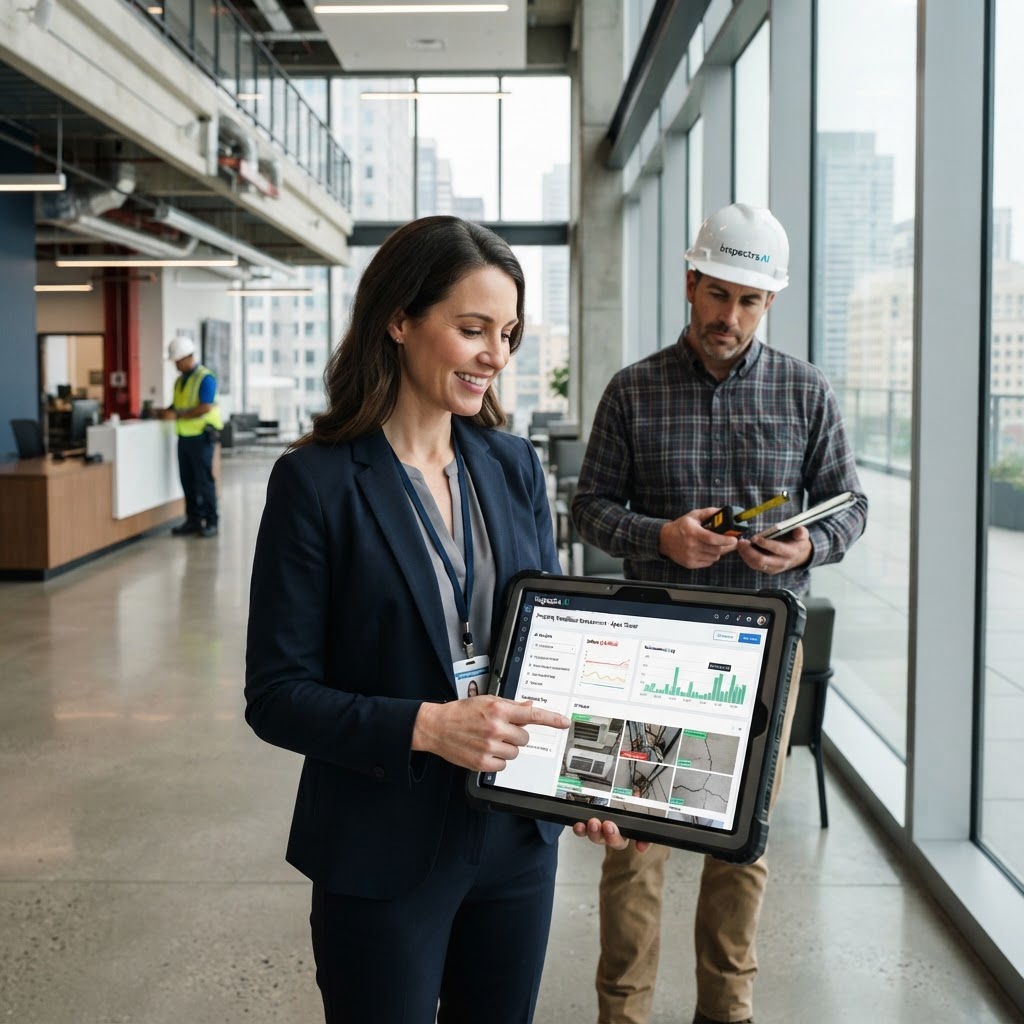
In the dynamic world of property and facility management, maintaining accurate and timely property condition reports is paramount. These reports are critical for everything from routine maintenance scheduling and capital expenditure planning to tenant relations and compliance. However, the traditional process of generating these reports is often manual, time-consuming, and prone to inconsistencies.
Imagine a world where site photos automatically transform into professional, structured inspection reports. This is no longer a futuristic concept but a present-day reality, thanks to artificial intelligence. This article explores how AI is revolutionizing property condition reporting, offering facility and property managers an unprecedented level of efficiency, accuracy, and insight.
For facility and property managers, the process of documenting property conditions can be a significant drain on resources. The manual approach, while familiar, comes with a host of challenges that impede operational efficiency and decision-making.
Traditional inspections involve extensive manual effort. Inspectors must meticulously document findings, often taking numerous photos, writing detailed notes, and then spending hours organizing this information back at the office. This includes:
This entire cycle can delay the availability of critical information, impacting subsequent actions.
Human subjectivity and fatigue can lead to inconsistencies in reporting. Different inspectors might describe the same issue differently, or even overlook minor yet significant details. This can result in:
Such inconsistencies can complicate comparisons over time and make it difficult to build a reliable historical record of property conditions.
The time lag between inspection, report generation, and review directly impacts decision-making. Urgent repairs might be delayed, budget allocations might be based on outdated information, and proactive maintenance opportunities could be missed. Slow reporting can lead to:
Beyond time, manual reporting consumes significant financial and human resources. The costs associated with labor hours, printing, storage, and potential re-inspections due to incomplete reports can quickly add up. This diverts valuable resources that could be better utilized for strategic planning or direct property improvements.
In today's fast-paced environment, relying solely on manual processes for property condition reporting is no longer sustainable. Automation isn't just a convenience; it's a strategic imperative for facility and property managers looking to optimize operations, reduce costs, and enhance service delivery.
Automation enables a shift from reactive problem-solving to proactive management. By streamlining data collection and report generation, managers gain quicker access to actionable insights, allowing them to anticipate maintenance needs, allocate budgets more effectively, and ensure compliance with regulatory standards. This technological leap provides a significant competitive advantage, demonstrating a commitment to efficiency and innovation to stakeholders and tenants alike.
Key takeaway: Embracing automation transforms property management from a reactive, labor-intensive function into a data-driven, strategic operation.
Artificial intelligence is at the forefront of this transformation, offering sophisticated capabilities that go far beyond simple data entry. AI-powered solutions can interpret, analyze, and structure information in ways that were previously impossible, making the entire reporting process smarter and more efficient.
The core of AI's power in property inspections lies in its ability to analyze visual data. Advanced computer vision algorithms can process site photos to:
This objective analysis significantly reduces the chances of human error and ensures a consistent standard of inspection across all properties.
Once issues are identified, AI excels at turning unstructured data (raw photos, voice notes) into structured, usable information. It can extract relevant details, tag photos with specific findings, and organize all data points into a logical framework. This means less time spent manually sorting through information and more time focused on strategic tasks.
With structured data in hand, AI can then automatically generate comprehensive inspection reports. These reports can be customized with specific templates, include automated narratives for identified issues, and seamlessly integrate photos and annotations. The result is a professional, detailed report created in a fraction of the time it would take manually.
For example, Inspectra AI is an AI inspection app that turns site photos into professional, structured inspection reports automatically. This capability significantly streamlines the reporting process for inspectors, builders, and property managers, ensuring consistency and accuracy.
Over time, as AI systems accumulate data from numerous inspections, they can begin to identify patterns and trends. This allows for predictive maintenance, where potential issues are flagged before they become critical, and long-term asset management strategies are informed by data-driven insights. AI can help answer questions like: Which types of properties experience certain issues more frequently? What is the expected lifespan of specific components based on their condition over time?
The adoption of AI-powered automated property condition reports brings a multitude of tangible benefits that directly impact the bottom line and operational efficiency.
By automating the most laborious parts of the inspection and reporting process, organizations can drastically reduce the time spent on administrative tasks. This translates directly into:
AI's unbiased analysis eliminates human subjectivity, leading to more accurate and consistent reports. This means:
Automated systems create a clear, auditable trail of all inspections and findings. This is invaluable for regulatory compliance, insurance claims, and legal documentation. Consistent, well-documented reports provide a robust record of property conditions over time, protecting stakeholders and ensuring adherence to standards.
With reports generated quickly and accurately, facility and property managers gain real-time insights into property conditions. This enables:
Professional, clear, and consistent reports foster better communication with property owners, tenants, and contractors. Stakeholders receive easy-to-understand documentation, enhancing transparency and trust. This can lead to improved tenant satisfaction and stronger relationships with property owners.
Integrating AI into your property inspection workflow might seem daunting, but with a structured approach, it can be a smooth and highly rewarding transition. The goal is to leverage AI to augment human capabilities, not replace them entirely.
Begin by thoroughly evaluating your existing inspection and reporting workflow. Identify bottlenecks, areas prone to error, and the most time-consuming tasks. Understand the types of data you currently collect and how it's used. This assessment will highlight where AI can provide the most significant impact.
Clearly articulate what you aim to achieve with AI automation. Are you looking to reduce report generation time by 50%? Improve report accuracy by a certain percentage? Enhance compliance? Specific, measurable goals will guide your implementation and help you track success.
Consider starting with a pilot program on a smaller scale. Select a few properties or a specific type of inspection to test the AI solution. This allows your team to familiarize themselves with the technology, identify any unforeseen challenges, and provide valuable feedback before a full-scale rollout.
Successful AI integration hinges on user adoption. Provide comprehensive training to your inspection and management teams. Emphasize how AI tools like Inspectra AI simplify their work, reduce administrative burden, and allow them to focus on their expertise. Foster an environment where questions are encouraged, and feedback is valued.
With several AI inspection solutions emerging, selecting the right one for your specific needs is crucial. Consider the following factors to ensure a successful investment:
Look for a solution with an intuitive interface that your team can quickly learn and adopt. It should also integrate seamlessly with your existing systems, such as property management software or CMMS, to avoid creating new data silos. A user-friendly experience is key to widespread adoption.
Evaluate the core AI engine's capabilities. How accurately does it identify defects from photos? Can it handle various types of property conditions and asset classes? Request demos and case studies to see the technology in action. Inspectra AI, for example, is specifically designed to turn site photos into professional, structured inspection reports, highlighting its core capability in this area.
Your property portfolio and reporting needs may evolve. Choose a solution that offers customization options for report templates, defect categories, and workflows. It should also be scalable, capable of handling a growing number of properties and inspections without compromising performance.
Reliable customer support is essential for any new technology. Ensure the vendor offers comprehensive training, technical assistance, and ongoing updates. Data security and privacy are also paramount; verify that the solution complies with industry standards and protects sensitive property information.
The landscape of property and facility management is continually evolving, driven by technological advancements and increasing demands for efficiency and transparency. Embracing AI-powered inspection solutions is not just about addressing current challenges; it's about strategically positioning your operations for future success.
By automating property condition reports, facility and property managers can unlock new levels of productivity, accuracy, and insight. This allows for more informed decision-making, proactive maintenance strategies, and ultimately, better asset performance and stakeholder satisfaction. The shift to AI-driven inspections represents a significant leap forward, enabling organizations to stay competitive and resilient in a complex market.
The future of property management is intelligent, automated, and data-driven. Are you ready to lead the way?
Discover how Inspectra AI can revolutionize your property condition reporting. Turn site photos into professional, structured inspection reports automatically, saving time and enhancing accuracy.
An automated property condition report is a document generated using technology, often AI, that compiles data from property inspections, identifies issues, and structures findings into a professional report with minimal manual input. It streamlines the entire reporting process from photo capture to final document.
AI enhances accuracy by objectively analyzing visual data (photos) to identify defects and inconsistencies, reducing human error and subjectivity. It boosts efficiency by automating data processing, categorizing issues, and generating reports, significantly cutting down on the time and manual effort traditionally required.
Modern AI inspection software is designed for ease of integration. While initial setup involves understanding the system and training staff, many solutions offer intuitive interfaces, comprehensive support, and API capabilities to ensure a smooth transition with minimal disruption to existing operational workflows.