
All articlesdefect inspection
Defect Inspection Reports: Your Top Questions Answered
Inspectra AI Team September 17, 2026 10 min read
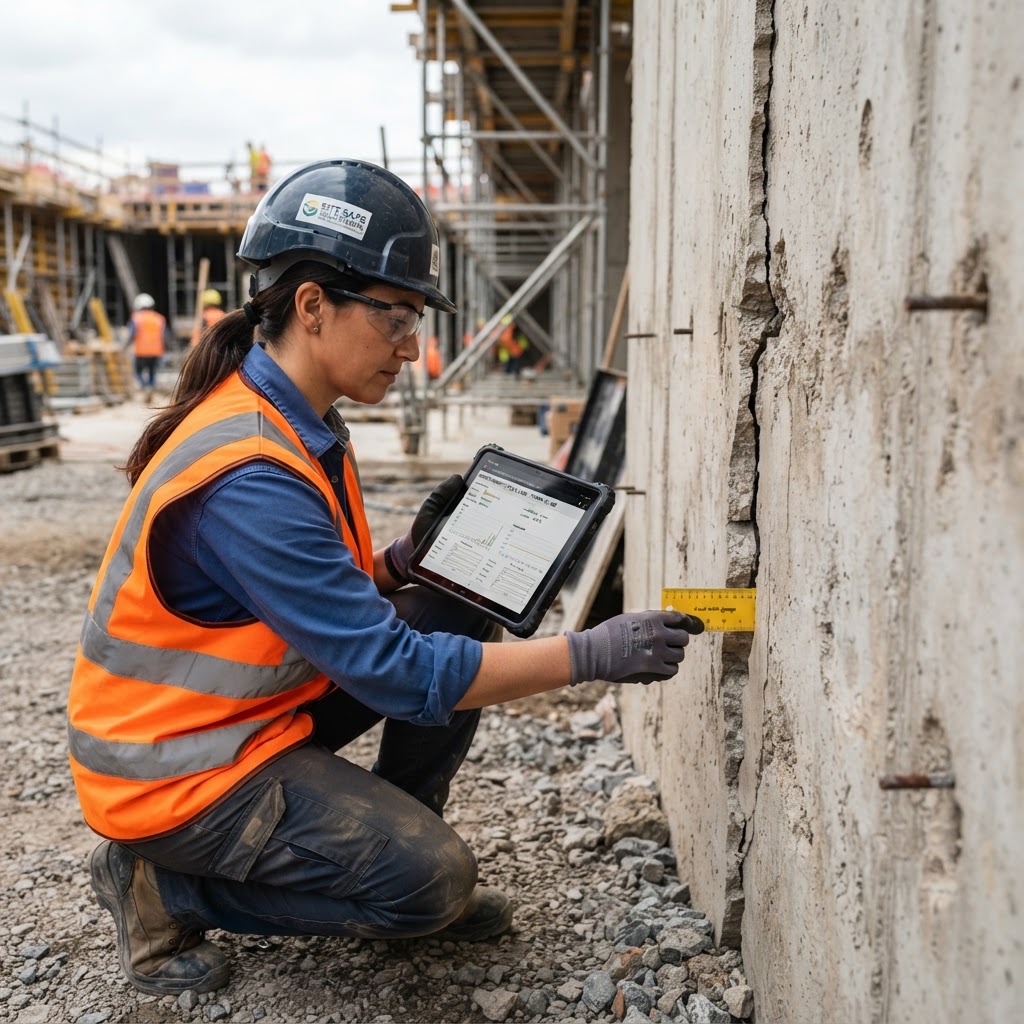
A defect inspection report is a formal document that identifies, describes, and prioritises physical faults in a building or asset — giving owners, managers, and contractors a clear record for rectification and liability. Done properly, it protects all parties, satisfies insurers, and meets the requirements of standards such as AS 4349.1-2007 (Australia), RICS guidance notes (UK), and InterNACHI's Standards of Practice (US). Done poorly, it creates disputes, delays, and cost blowouts.
A defect inspection report documents observable faults in a structure or asset at a specific point in time. It is not a design audit or a compliance certificate — it records what the inspector saw, classifies each fault, and recommends next steps. The report becomes a legal and contractual reference point: builders use it to scope rectification work, owners use it to enforce warranty claims, and insurers use it to assess damage.
The core components of a professional report are:
| Component | Purpose | |---|---| | Property and inspection details | Identifies the asset, inspection date, scope, and limitations | | Inspector credentials | Establishes authority and accountability | | Executive summary | Quick-read overview for non-technical stakeholders | | Defect schedule | Itemised list with location, classification, description, and photos | | Recommended actions | Rectification, monitoring, or further investigation | | Appendices | Supporting photos, thermal images, moisture readings |
Classification systems vary by standard, but the most widely used framework in residential and commercial building inspection separates defects into two or three tiers.
Under AS 4349.1-2007, a major defect is one that is likely to affect structural integrity, prevent occupation, or require major remedial work. Examples include cracked or displaced footings, waterproofing failures that allow water ingress into occupied areas, and structural framing defects. A minor defect is any fault that does not meet the definition of major — think paint holidays, incomplete caulking, or misaligned fixtures.
This distinction matters because it determines urgency, warranty obligations, and whether a practical completion certificate (or equivalent) should be withheld.
Many commercial and strata inspectors use a three-tier system:
Whatever system you use, define your classification criteria explicitly in the report — this removes ambiguity if the document is reviewed by a third party.
A strong defect entry answers five questions:
Vague language — "cracking noted," "some moisture," "general deterioration" — is the single most common reason defect reports are challenged in dispute resolution.
There is no universal minimum, but a working rule used by most experienced inspectors is at least one context photo and one close-up photo per defect. For significant or critical defects, add a third photo showing any measurement tool (crack gauge, moisture meter display, tape measure) in frame.
Photo best practices:
Platforms like Inspectra AI can link photos directly to defect line items during capture, eliminating the manual matching step that adds hours to report production.
Experienced inspectors and dispute resolution specialists consistently flag the same categories of missed or under-documented defects:
Wetroom and balcony waterproofing is the leading source of building defect litigation in Australia. Failures are often invisible at the time of inspection unless a flood test or moisture mapping is performed. Inspectors should note the absence of a flood test in their scope limitations if one was not conducted.
Many inspectors report on accessible roof voids and subfloor spaces only if entry is safe and practicable. The problem is that termite activity, inadequate ventilation, and condensation damage are frequently concentrated in these areas. Always photograph the entry point and note the access conditions.
Mild cracking at slab edges and internal door frames is often dismissed as cosmetic. A pattern of cracks — consistent direction, consistent height across multiple openings — can indicate differential foundation movement that warrants a structural engineer's review.
In multi-residential and commercial buildings, penetrations through fire-rated walls and floors for services (plumbing, electrical conduits) that have not been correctly fire-stopped are a critical defect. They are also invisible without access to ceiling and wall cavities.
Visible rust staining or spalling concrete on balconies, facades, and suspended slabs indicates carbonation or chloride-induced corrosion of reinforcement steel. Early identification significantly changes the remediation cost curve.
Time on site and report production time depend on asset size, complexity, and access conditions. Indicative ranges:
| Asset type | On-site time | Report production (manual) | |---|---|---| | Single residential dwelling | 2–4 hours | 4–8 hours | | Townhouse or villa unit | 1–2 hours | 2–4 hours | | Mid-rise apartment building | 4–8 hours | 8–16 hours | | Commercial office floor | 3–6 hours | 6–12 hours | | Infrastructure asset (bridge, retaining wall) | Variable | Variable |
AI-assisted report platforms can cut the write-up phase by 50–70%, which is significant when an inspector is processing multiple jobs per week. Start a free trial to see how Inspectra AI handles defect scheduling and photo tagging in the field.
A building inspection is a broad term that can cover pre-purchase assessments, compliance checks, or condition surveys. A defect inspection is specifically focused on identifying and documenting faults — whether for warranty claims, handover, or maintenance planning. All defect inspections are a type of building inspection, but not all building inspections are defect-focused.
Yes, but its evidentiary value depends on the inspector's credentials, the methodology used, the objectivity of the language, and whether it was prepared in accordance with a recognised standard. Reports prepared by licensed or registered practitioners using a defined methodology (such as AS 4349.1 in Australia) carry significantly more weight in tribunal and court proceedings than informal assessments.
A defect report is a snapshot in time — it reflects conditions on the inspection date only. Most professional reports state explicitly that conditions may change and that the report should not be relied upon beyond a defined period, typically 90 days for residential property transactions. For ongoing asset management, periodic re-inspection intervals should be established based on asset age, condition, and risk profile.
Requirements vary by jurisdiction and asset type. In Australia, residential defect inspections for statutory warranty purposes should be conducted by a licensed builder or registered building inspector. In the UK, RICS-qualified surveyors handle most residential and commercial surveys. In the US, most states require home inspectors to hold a state licence. Always confirm that your inspector's licence covers the asset type in question.
First, ensure your report is specific and well-documented — vague findings are easy to dispute. If the builder contests a finding, request a joint inspection with both parties present and agree on an independent third-party assessor if necessary. In Australia, most state building tribunals (e.g., NCAT in NSW, VCAT in Victoria) have low-cost pathways for building dispute resolution. Keep all correspondence and do not allow any rectification work to proceed on disputed items until the defect status is agreed.
Use your classification system: critical defects with safety implications should be addressed immediately, often before re-occupation. Significant defects should have a rectification timeline specified in the report — 30, 60, or 90 days is common. Maintenance items can be rolled into the next scheduled maintenance programme. For large defect schedules (common in strata buildings), a prioritised defect register with assigned responsibility and target completion dates is more useful than a static PDF report.
A defect inspection report is only as good as the specificity of its findings, the quality of its photographic evidence, and the clarity of its recommended actions. Inspectors who invest in rigorous field capture — precise locations, measured observations, well-lit photos — produce reports that hold up under scrutiny and build long-term professional credibility.
If report production time is eating into your profitability, Inspectra AI is built for exactly this workflow: capture in the field, AI-assisted drafting, human review and sign-off. The defect schedule writes itself.