
All articlesproperty inspection
Expert Guide: Automating Structured Inspection Reports from Photos
Inspectra AI Team July 15, 2026 9 min read
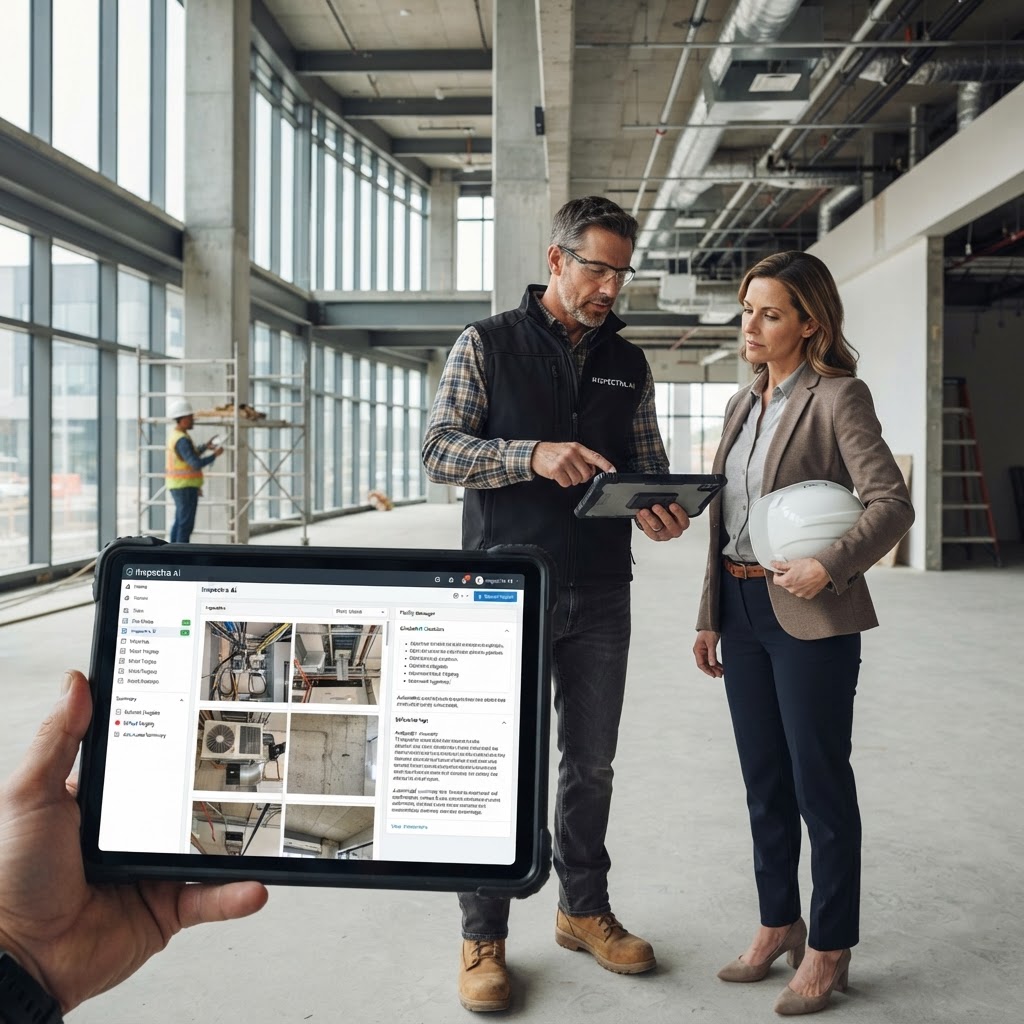
In the demanding fields of property inspection, construction, and facility management, the ability to generate accurate, comprehensive, and timely reports is paramount. Traditionally, this process has been a labor-intensive endeavor, often involving countless hours of manual data entry, photo organization, and report formatting. This not only consumes valuable time but also introduces inconsistencies and potential errors.
However, a significant shift is underway. Artificial intelligence (AI) is revolutionizing how professionals transform raw site photos into polished, structured inspection reports automatically. This guide explores the challenges of traditional reporting and demonstrates how AI-powered automation offers a powerful, efficient, and accurate solution for inspectors, builders, and property managers alike.
The manual creation of inspection reports is fraught with inefficiencies and potential pitfalls. From the moment photos are taken on-site to the final report delivery, each step can be a bottleneck, impacting productivity and report quality.
When multiple inspectors or teams are involved, maintaining a consistent reporting standard becomes a significant hurdle. Different approaches to documentation, varying levels of detail, and diverse formatting styles can lead to reports that are difficult to compare, analyze, or even understand across projects or properties. This lack of uniformity can hinder compliance efforts and create confusion for stakeholders.
After a thorough site visit, inspectors often face hours of desk work. This includes manually uploading photos, categorizing them, typing out descriptions, noting defects, and then meticulously formatting everything into a presentable document. This post-inspection administrative burden can often take longer than the inspection itself, delaying report delivery and limiting the number of inspections an individual can complete.
Human error is an unavoidable factor in any manual process. Misplaced photos, typos in descriptions, overlooked details, or incorrect data entry can compromise the accuracy and reliability of an inspection report. Such errors can have serious implications, leading to disputes, costly rework, or even safety hazards.
Unstructured reports, often a collection of text and images without standardized data fields, make it incredibly challenging to perform meaningful analysis. Identifying recurring issues across multiple properties, tracking maintenance trends, or benchmarking performance becomes a near-impossible task without a consistent, structured dataset. This limits the ability to make data-driven decisions and implement proactive strategies.
A structured inspection report is more than just a document; it's an organized, standardized dataset designed for clarity, consistency, and analytical utility. Key characteristics include:
By moving towards structured reporting, organizations gain a powerful tool for compliance, quality control, and long-term asset management.
This is where AI steps in, offering a transformative solution to the challenges of manual reporting. AI-powered inspection apps leverage advanced technologies to automate the conversion of site photos into comprehensive, structured reports, dramatically improving efficiency and accuracy.
At its core, AI for inspection reporting relies on computer vision and machine learning. When you upload a photo, the AI system processes it by:
The AI's interpretation doesn't stop at identification. It then translates these visual observations into structured data points. For example, a photo showing a crack in a wall might be automatically tagged with:
This process eliminates manual data entry for each observation, ensuring consistency and significantly speeding up report generation. The AI essentially acts as a highly efficient, tireless data clerk, extracting and organizing information directly from your visual evidence.
The adoption of AI in inspection reporting brings a multitude of advantages:
Implementing an AI-powered inspection reporting system might seem complex, but the process is surprisingly straightforward, designed to integrate smoothly into your existing workflow.
The foundation of any AI-driven system is the quality of its input. Ensure your team captures clear, well-lit, and focused photos from multiple angles. Good photographic practices are crucial for the AI to accurately identify and categorize defects. Think of your camera as the AI's eyes; the clearer the vision, the better the analysis.
Once photos are captured, they are uploaded to the AI inspection platform. This is where the magic happens. An app like Inspectra AI uses its advanced algorithms to analyze each image, automatically detecting and identifying defects, categorizing them, and extracting relevant data points. It then populates these findings into predefined fields within your report template, eliminating the need for manual data entry.
While AI provides a robust foundation, customization is key. Most AI inspection solutions allow you to tailor report templates to meet specific client requirements, industry standards, or internal protocols. You can define custom fields, add company branding, and adjust the layout to ensure the final report perfectly aligns with your professional needs.
With the data automatically extracted and organized, generating the final report is often a one-click process. The system compiles all information, including photos, descriptions, and recommendations, into a professional, exportable document (e.g., PDF). These reports can then be easily shared with clients, contractors, or internal teams via email, cloud links, or integrated client portals.
Modern AI inspection platforms are built for interoperability. They often offer integrations with common project management software, CRM systems, or property management platforms. This ensures that your automated inspection reports can seamlessly feed into your broader operational ecosystem, preventing data silos and enhancing overall workflow efficiency.
Selecting the ideal AI inspection app is crucial for maximizing the benefits of automation. Consider the following factors when evaluating your options:
Solutions like Inspectra AI are specifically designed with these criteria in mind, offering a powerful, user-friendly platform that turns site photos into professional, structured inspection reports automatically for inspectors, builders, and property managers.
AI-powered automated reporting delivers tangible benefits across various professional roles:
The era of manual, time-consuming inspection reporting is rapidly drawing to a close. AI-powered automation is not just a technological advancement; it's a fundamental shift in how inspections are conducted, documented, and utilized. By transforming raw photos into structured, actionable reports, businesses can unlock unprecedented levels of efficiency, accuracy, and insight.
Embracing this technology means empowering your team to focus on critical tasks, make data-driven decisions, and deliver superior service to your clients. The future of inspection reporting is automated, intelligent, and incredibly efficient.
Ready to transform your inspection process and experience the power of AI? Explore how Inspectra AI can help you automate structured inspection reports from photos, saving time and enhancing accuracy. Start your free trial today.