
All articlespest inspection
Pest Inspection Frequency: How Often and What's Required
Inspectra AI Team November 25, 2026 10 min read
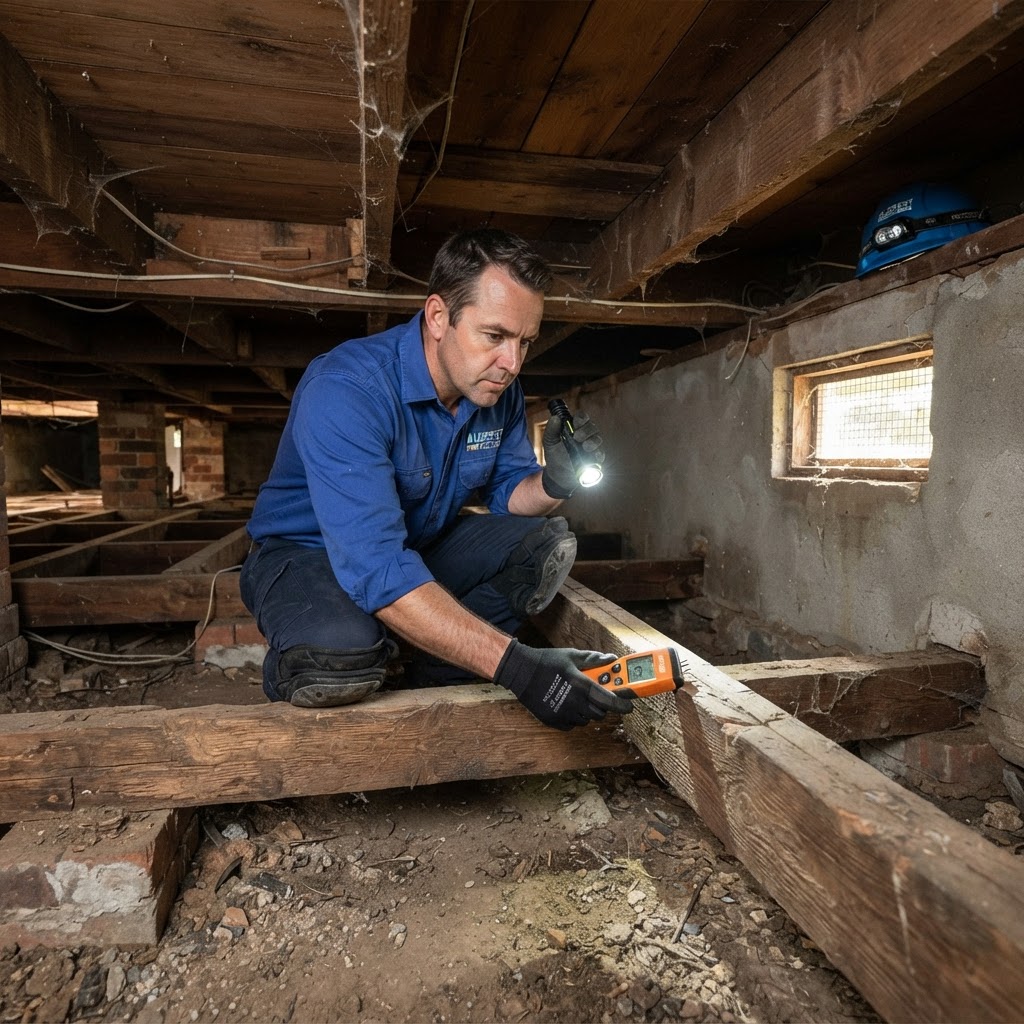
Most properties should have a professional pest inspection at least once a year, though high-risk properties — particularly timber-framed buildings in termite-prone regions — warrant inspections every six months. Frequency depends on property type, geographic risk, regulatory obligations, and insurance requirements.
Pest inspections are not a one-and-done exercise. Termites alone cause an estimated AUD $1.5 billion in property damage annually in Australia. In the US, the National Pest Management Association (NPMA) puts combined pest-related property damage at over USD $5 billion per year. The gap between inspections is precisely when undetected infestations establish themselves, spread, and cause structural damage that is expensive to remediate.
For inspectors, property managers, and strata managers, understanding the recommended and legally required inspection cadence is essential — both for advising clients and for building defensible documentation trails.
| Property type | Recommended frequency | Key driver | |---|---|---| | Standard residential (low risk) | Annually | AS 3660.2 / general best practice | | Timber-framed home (high termite risk) | Every 6 months | AS 3660.2 high-risk zones | | Older home (pre-1980 construction) | Annually at minimum | Aging materials, known pest entry points | | Newly built home with termite barrier | Annually | Barrier warranty maintenance | | Rental property | At least annually; often per tenancy cycle | Landlord duty of care |
In Australia, AS 3660.2-2017 (Termite management — In and around existing buildings and structures) is the governing standard for post-construction termite management. It recommends inspection intervals based on the assessed level of risk, with high-risk areas including Queensland, the Northern Territory, and coastal New South Wales.
In the US, the Wood Destroying Organism (WDO) inspection — sometimes called a termite letter — is required by lenders including FHA and VA at property sale. Beyond point-of-sale, the NPMA and state pest control boards generally recommend annual inspections, with some southeastern states (Florida, Georgia, Louisiana) recommending every 6 months due to high subterranean termite pressure.
In the UK, there is no equivalent statutory annual inspection mandate for residential pests, but landlords are required under the Homes (Fitness for Human Habitation) Act 2018 to ensure properties are free from infestations that make them uninhabitable. The British Pest Control Association (BPCA) recommends annual surveys for rodents and stored product insects in residential settings.
Strata properties present a compounded risk: a termite colony or rodent infestation in one unit can migrate across the entire building before detection. Owners corporations and body corporates in Australia are advised under AS 3660.2 to maintain annual inspections across common areas, with individual lot inspections coordinated through the owners corporation.
For strata managers, coordinating a single annual building-wide inspection is more cost-effective than managing individual lot inspections independently. Some strata schemes in high-risk zones schedule biannual inspections as part of their 10-year maintenance plans under the Strata Schemes Management Act 2015 (NSW).
Commercial properties — particularly food processing facilities, warehouses, hospitality venues, and healthcare facilities — are subject to more rigorous requirements:
Construction sites disturb soil and can inadvertently create termite pathways or rodent harborage. Under AS 3660.1-2014 (Termite management — New building work), builders must establish termite management systems during construction. Pre-slab and post-frame inspections are standard milestones. Property managers taking handover of new buildings should confirm compliant inspections were completed before accepting the building.
Termite activity in Australia is mapped by CSIRO into risk zones. Tropical and subtropical regions (Zone 4, the highest risk) include Darwin, Cairns, and coastal Queensland — these locations justify six-monthly inspections. Temperate zones (Melbourne, Adelaide, Perth) are generally annual.
In the US, the USDA Forest Service Termite Infestation Probability (TIP) zones rate risk from Zone 1 (very heavy) in Florida and the Gulf Coast to Zone 4 (none to slight) in the northern states. Zone 1 and 2 properties warrant more frequent inspections.
Older properties — particularly those built before mandatory termite barriers were introduced — carry a higher baseline risk. Timber stumps, aging subfloor timbers, and deteriorating seals create entry points that warrant more frequent monitoring. Brick veneer or concrete slab construction does not eliminate termite risk; termites readily bridge slabs through expansion joints and service penetrations.
Any property with a previous infestation history should be inspected every 6 months, regardless of treatment. Termite treatment warranties (e.g., from Termidor, Biflex) typically require annual inspections to remain valid. Skipping an inspection can void the warranty outright.
Some building insurers — particularly in high-risk zones — require documented annual pest inspections as a condition of cover. Failing to maintain the inspection schedule can complicate claims where pest damage is a contributing factor. Mortgage lenders in the US, as noted, require WDO reports at point of sale. Some lenders require ongoing annual inspections as a loan covenant for investment properties.
In Australia, landlords are not explicitly required by residential tenancy legislation to conduct annual pest inspections (requirements vary by state), but they are required to provide and maintain a property in a reasonable state of cleanliness and repair. A documented annual inspection schedule is the strongest evidence of due diligence if a tenant dispute arises.
In the UK, section 11 of the Landlord and Tenant Act 1985 and the Homes (Fitness for Human Habitation) Act 2018 create an implied obligation to address structural conditions that allow pest ingress. Proactive annual surveys are considered best practice by BPCA.
A standard annual inspection by a licensed pest inspector typically covers:
For a detailed walkthrough of what to record during inspections, see the Inspectra AI guide on pest inspection documentation.
| Inspection type | Australia (AUD) | United States (USD) | United Kingdom (GBP) | |---|---|---|---| | Standard residential (annual) | $200–$350 | $75–$150 | £100–£200 | | High-risk residential (6-monthly) | $200–$350 per visit | $75–$150 per visit | £100–£200 per visit | | Strata building (whole complex) | $500–$2,000+ | $300–$1,500+ | £250–£1,000+ | | Commercial (quarterly program) | $300–$800/quarter | $150–$500/quarter | £150–£400/quarter | | Pre-purchase (one-off) | $250–$500 | $75–$300 | £150–£300 |
Note: Prices vary significantly by region, property size, and inspector credentials. Thermal imaging adds approximately AUD $100–$200 / USD $50–$150 to a standard inspection.
AS 3660.2-2017 recommends at least annually for most residential properties, and every 6 months in high-risk zones (tropical and subtropical regions). Properties with active termite management systems should follow the warranty schedule, which typically requires annual inspections to maintain coverage.
For FHA and VA loans, a Wood Destroying Organism (WDO) inspection is required in most states before loan approval. Conventional loans may not mandate it, but buyers are strongly advised to commission one. Requirements vary by state; Florida, Georgia, and several other southeastern states have specific WDO disclosure laws.
There is no statute prescribing a specific inspection frequency, but landlords have obligations under the Homes (Fitness for Human Habitation) Act 2018 and section 11 of the Landlord and Tenant Act 1985 to address conditions that allow pest ingress. Annual surveys are BPCA best practice and represent reasonable due diligence.
Yes. In Australia, AS 3660.1-2014 governs termite management during construction. After handover, the property should still be inspected annually to monitor the installed termite management system and to validate that the barrier remains intact. New builds are not immune — soil disturbance during construction can redirect termite activity.
Missing an inspection can void active termite treatment warranties, complicate insurance claims where pest damage is a factor, and weaken your position in landlord-tenant disputes. For commercial food businesses, a gap in documented inspections can result in a failed third-party audit or regulatory action.
Owner visual checks are useful between professional visits but do not substitute for a licensed inspection. In Australia, only licensed pest inspectors (licensed under state legislation such as the Pest Management Act 2001 in QLD) can produce reports that satisfy AS 3660.2 requirements, lender conditions, or insurance documentation requirements. The same applies in the US (state-licensed pest control operators) and UK (BPCA-qualified surveyors).
For most residential properties, an annual professional pest inspection is the baseline. High-risk locations, timber construction, previous infestations, and active treatment warranties all push that to every six months. Commercial properties and food-handling facilities generally require quarterly programs. The cost of staying on schedule — typically AUD $200–$350 / USD $75–$150 per residential visit — is a fraction of the remediation costs when an infestation is caught late.
If you manage multiple properties or run a pest inspection business and need a faster way to produce compliant, professional reports from site photos and field notes, start a free trial with Inspectra AI and see how much time you save on documentation.