
All articlesfacility inspection
Facility Inspection Cost: A Complete Pricing Guide
Inspectra AI Team September 27, 2026 9 min read
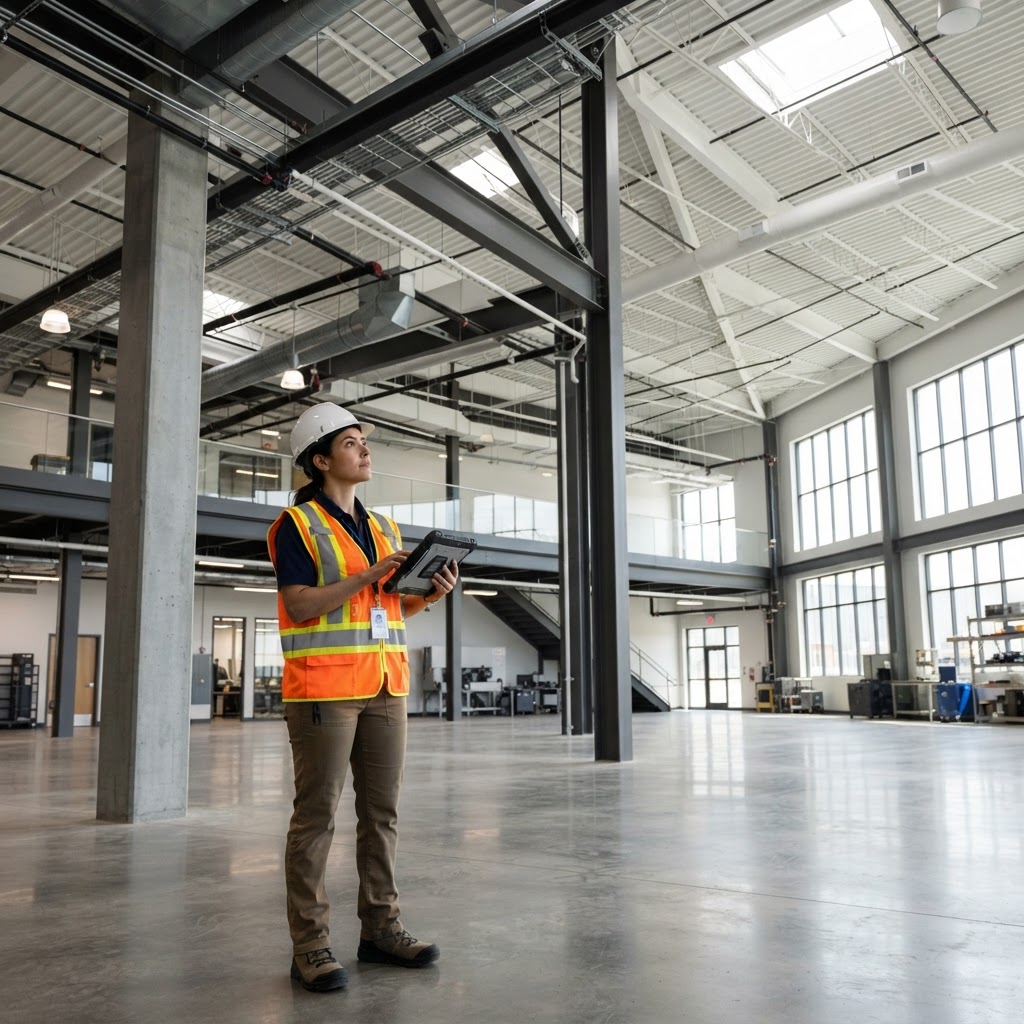
A facility inspection typically costs between $300 and $3,000+ depending on the building type, size, location, and scope of work. Routine compliance checks sit at the lower end; full structural and systems audits for large commercial or industrial facilities can reach five figures. Understanding what drives these costs helps you budget accurately and avoid paying for scope you don't need.
A facility inspection is a systematic assessment of a building's physical condition, safety systems, and compliance status. It covers the structure, building envelope, mechanical and electrical services, fire protection, access and egress, and general maintenance condition. Unlike a single-trade inspection (e.g., a pest or electrical check), a facility inspection is holistic — the inspector evaluates how the whole asset is performing against its intended use and applicable regulations.
Facility inspections are commissioned by property managers, strata managers, asset owners, insurers, and tenants. Common triggers include:
The table below shows indicative price ranges across three markets. Prices are in local currency and assume a general condition inspection with a written report. Specialist trade inspections (fire, HVAC, electrical) are additional.
| Building type | Australia (AUD) | United States (USD) | United Kingdom (GBP) | |---|---|---|---| | Small retail or office (<500 m²) | $400–$800 | $300–$700 | £250–£600 | | Medium commercial (500–2,000 m²) | $800–$1,800 | $700–$1,600 | £600–£1,400 | | Large commercial (2,000–5,000 m²) | $1,800–$3,500 | $1,600–$3,200 | £1,400–£2,800 | | Industrial / warehouse | $1,200–$4,000 | $1,000–$3,500 | £900–£3,000 | | Multi-storey office or mixed-use | $3,000–$8,000+ | $2,500–$7,000+ | £2,200–£6,000+ | | Strata / body corporate complex | $600–$2,500 | $500–$2,200 | £450–£2,000 |
Note: These are market benchmarks, not guaranteed quotes. Always obtain at least three quotes for any facility inspection.
Most inspectors price primarily on floor area. A common baseline in Australia is approximately $0.50–$1.20 per m² for a standard condition report. In the US, inspectors often quote $0.10–$0.25 per sq ft for commercial properties. Larger buildings take longer to walk, photograph, and document, so cost scales with size — though not always linearly, since some overhead (travel, report setup) is fixed.
A modern single-storey warehouse is simpler to inspect than a 1960s multi-level building with suspended ceilings, asbestos-containing materials (ACMs), and ageing HVAC plant. Inspectors typically add a complexity premium of 15–30% for buildings over 30 years old or those with known hazardous materials.
A general visual inspection covering structure, envelope, and finishes is the baseline. Each additional system adds cost:
When bundling multiple systems, ask for a combined scope discount — typically 10–20% off the sum of individual line items.
A standard written report with photos delivered within 5–7 business days is the baseline. Expect a 20–30% premium for:
Platforms like Inspectra AI automate much of the report assembly from field notes and photos, which helps inspectors deliver faster turnarounds without the same cost uplift.
Metropolitan inspectors generally charge a flat travel fee of $0–$80 for sites within 30–50 km of their base. Regional and remote sites attract travel time (typically billed at $80–$150/hr) plus accommodation if an overnight stay is required. For a remote industrial facility requiring a full day of travel, total costs can double.
A sole-operator inspector with 10+ years of experience may charge less than a large consultancy with liability insurance, ISO-certified processes, and a multi-inspector team — or vice versa. Check that any inspector holds:
Higher credentials generally correlate with higher fees but also better legal defensibility of the report.
The cost of a facility inspection is almost always a fraction of the risk it mitigates. Consider:
For property managers running regular inspection cycles, the per-inspection cost drops significantly with volume. Many inspection firms offer annual facility inspection contracts at 15–25% below ad hoc rates in exchange for scheduled access and predictable workflow.
To get a reliable quote — rather than a vague ballpark — provide the following to every inspector you approach:
Providing this upfront eliminates the padding inspectors add when quoting blind, and makes quotes directly comparable.
For organisations managing multiple properties or running regular inspection programs, there are several practical ways to reduce per-inspection spend without compromising quality:
Batch inspections. Grouping multiple properties in the same suburb or city into a single mobilisation reduces travel costs and often earns a volume discount.
Standardise your scope. A consistent inspection template means inspectors spend less time scoping and more time inspecting. It also makes reports easier to compare across your portfolio.
Use technology for data capture. Inspectors using mobile-first tools with voice-to-text notes, structured photo tagging, and AI-assisted report drafting complete reports faster. That efficiency can be passed back to clients as lower fees — or absorbed as margin by inspectors offering competitive pricing. Platforms like Inspectra AI are designed specifically for this workflow; you can start a free trial to see how it fits your operation.
Maintain good records. An up-to-date asset register, previous inspection reports, and a current maintenance log all reduce the time an inspector spends reconstructing baseline condition. Less discovery time equals lower fees.
For a small commercial property under 500 m², expect 1–2 hours on-site plus 2–4 hours for report preparation. A large or complex facility over 2,000 m² typically requires a full day on-site and 1–2 days for reporting. Specialist system inspections (HVAC, fire) are usually conducted separately and add their own time.
The terms overlap but are not identical. A building inspection (as defined under AS 4349.1 in Australia) focuses on the structural and physical condition of a building. A facility inspection is broader — it also covers operational systems, maintenance condition, compliance status, and sometimes occupant safety. The scope depends entirely on what is agreed with the inspector before engagement.
Requirements vary by jurisdiction and scope. In most Australian states, inspectors reporting on structural condition must hold a builder's or building inspector's licence. In the US, licensing is state-specific and not universally required for commercial inspections, though certifications (InterNACHI, ASHI) are widely recognised. In the UK, RICS membership or RPSA accreditation is the standard for commercial and residential surveys. Always verify credentials before engaging.
Yes, provided the report meets the insurer's requirements. Insurers typically want a report that documents current condition with dated photographs, identifies defects and their severity, and is signed by a qualified inspector. Some insurers specify their own form or checklist — confirm this before commissioning the inspection to avoid paying for a report that doesn't satisfy the insurer's format.
Best practice under BS 8210 (UK) and general guidance from BOMA (US) and the Australian Facilities Management Association (AFMA) suggests a full condition inspection every 3–5 years for most commercial facilities, with annual maintenance-focused walkthroughs in between. High-use or high-risk facilities (hospitals, aged care, industrial) should be inspected annually at minimum.
A facility inspection assesses physical condition — what is present, what is damaged, what needs repair. A facilities audit is broader and evaluates operational processes, maintenance management systems, compliance documentation, and organisational performance against a standard or benchmark. An audit typically costs more and takes longer than a condition inspection.
Facility inspection costs range from a few hundred dollars for a small commercial tenancy to several thousand for a large or complex asset. The key variables are floor area, building age, systems in scope, report format, and location. For most property managers and asset owners, the inspection fee is minor relative to the compliance risk, insurance exposure, and maintenance cost it helps manage.
If you're running regular inspection programs, standardising your scope and using purpose-built tools to speed up reporting are the two most effective ways to reduce per-inspection spend. Inspectra AI is built for exactly that — helping inspectors capture data in the field and produce professional, human-approved reports faster than traditional methods.