
All articlesvehicle inspection
Fleet Vehicle Inspection Checklist: A Step-by-Step Guide
Inspectra AI Team September 13, 2026 11 min read
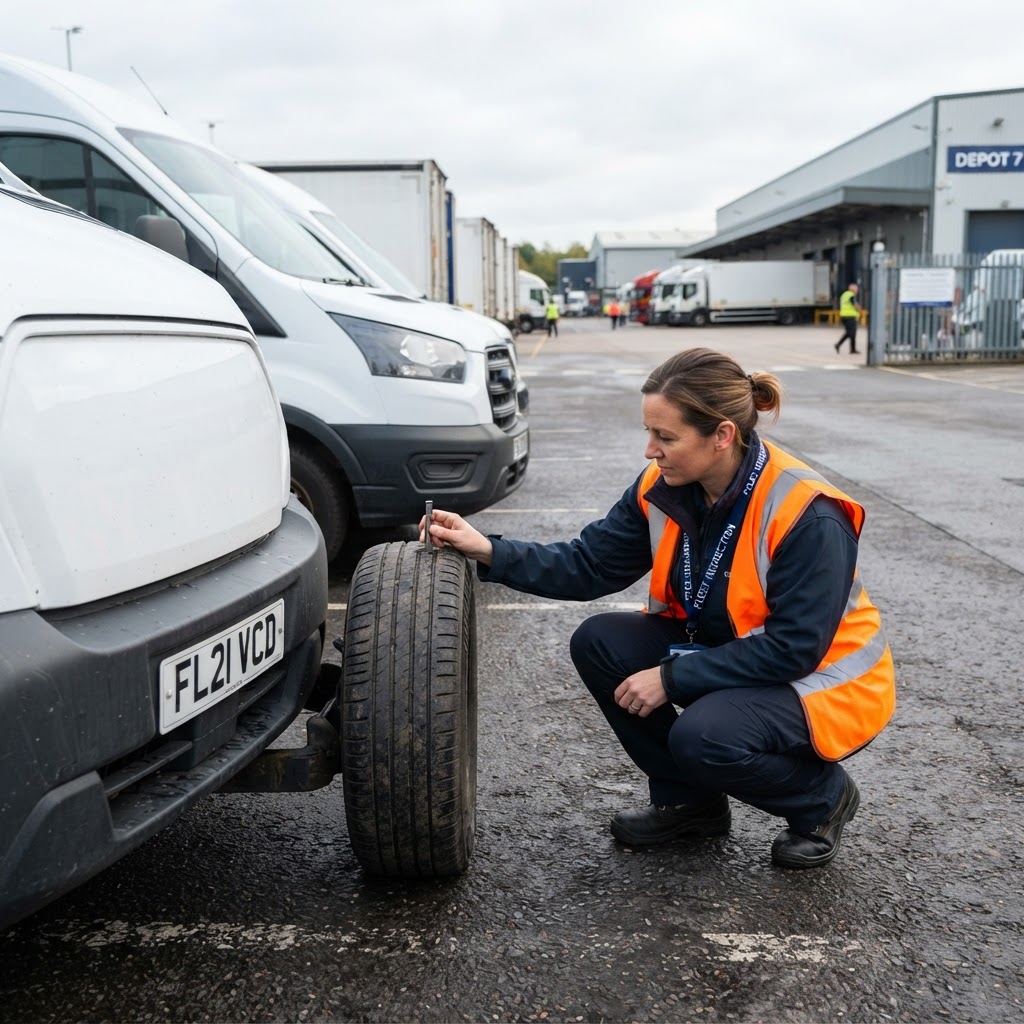
A fleet vehicle inspection is a systematic check of a vehicle's mechanical condition, safety systems, and compliance status before or after use. Done consistently, these inspections reduce unplanned downtime, satisfy roadworthiness regulations across Australia, the US, and the UK, and create a defensible paper trail when incidents occur.
Fleet vehicles accumulate wear faster than privately owned cars. A single tyre blowout on a highway or a brake failure in an urban delivery zone can result in fatalities, regulatory fines, and civil liability. In Australia, heavy vehicle operators face penalties under the Heavy Vehicle National Law (HVNL) for allowing an unsafe vehicle on a road. In the US, the Federal Motor Carrier Safety Administration (FMCSA) requires drivers of commercial motor vehicles to complete a Driver Vehicle Inspection Report (DVIR) after each trip. In the UK, the DVSA expects operators to have a documented defect reporting system as part of their Operator Licence conditions.
Beyond compliance, a robust inspection programme pays for itself. Industry data from the American Transportation Research Institute (ATRI) consistently shows that unplanned breakdowns cost fleets between USD $250 and $500 per incident in roadside assistance alone — before accounting for lost productivity.
Completed by the driver before the vehicle moves. Takes 5–10 minutes for a light van, up to 30 minutes for a heavy combination vehicle. The goal is to identify any defect that could make the vehicle unsafe or non-compliant during the journey.
Completed at the end of a shift or route. Captures defects that developed during use — worn wiper blades, cracked tail-light lenses, low tyre pressure from a slow puncture. This feeds directly into the next day's pre-trip inspection.
Carried out by a qualified mechanic or fleet maintenance technician at defined intervals (typically every 10,000–15,000 km for light commercial vehicles, or per the manufacturer's service schedule). Covers all pre-trip items plus internal mechanical checks, brake pad depth measurement, suspension geometry, and emissions testing.
Triggered by any collision, near-miss, or unusual mechanical event. Must be completed before the vehicle returns to service. Documentation from this inspection is often required by insurers and may become evidence in legal proceedings.
Use this checklist as a template. Adapt it to your vehicle class and jurisdiction.
Tyre tread depth is a hard compliance threshold. Minimum legal depth is 1.5 mm across the central three-quarters of the tread width in Australia (Road Rules), 1.6 mm in the US (FMCSA 393.75), and 1.6 mm in the UK. However, most fleet policies set an internal threshold of 3 mm to allow a buffer.
For pre-trip checks, this is a functional test rather than a mechanical measurement:
A consistent defect classification prevents subjective decision-making in the field.
| Class | Definition | Action | |---|---|---| | Minor | Wear or damage that does not affect safety or compliance today | Log, monitor, schedule repair within next service | | Major | Defect likely to cause failure or non-compliance within a short period | Repair before the vehicle's next scheduled trip | | Critical | Immediate risk to safety or legal operation | Remove from service immediately; do not move until repaired |
Examples of critical defects: brake fluid below minimum, tyre below legal tread depth, cracked windscreen obstructing driver vision, seatbelt buckle failure.
Poor documentation is as dangerous as a poor inspection. If an incident occurs and your inspection records are incomplete, incomplete records will be treated as no record at all by a court or regulator.
Capture photos of any defect from two angles: a wide shot showing location on the vehicle, and a close-up showing the defect detail. Include a reference object (coin, finger, ruler) next to small defects to convey scale.
Every inspection entry must include the vehicle's odometer reading, the time the inspection was started and completed, and the inspector's full name and licence or employee number. This is explicitly required under FMCSA 396.11 and forms part of the audit trail under NHVL.
Avoid vague entries like "tyre looks okay." Write "OS front tyre tread depth 4.2 mm, no visible damage, inflated to 420 kPa against placard of 420 kPa." Specific measurements are defensible; subjective descriptions are not.
In the US, DVIRs must be retained for 3 months (FMCSA 396.11). In the UK, defect records must be kept for 15 months under DVSA guidance. In Australia, heavy vehicle records under the NHVL must be kept for 3 years. Build your retention schedule around the longest applicable requirement if you operate across jurisdictions.
Paper-based inspection programmes create several problems: illegible handwriting, lost forms, no photo attachment capability, and no automatic escalation. Platforms like Inspectra AI allow inspectors to complete checklists on a mobile device, attach timestamped photos, record voice notes about defect observations, and generate a structured report automatically.
The operational benefit is measurable. Inspectors using structured digital tools complete reports in under 6 minutes on average versus 18 minutes for paper equivalents, and photo capture rates increase from approximately 40% to over 90% of reported defects. Fleet managers receive real-time visibility of vehicle status across a dispersed workforce without waiting for forms to be physically returned.
If you manage a fleet of five vehicles or more, a digital inspection workflow pays back in time savings alone within the first month. Start a free trial to see how automated report generation works in practice.
Commercial vehicle drivers in most jurisdictions must complete a pre-trip and post-trip inspection every operating day. Scheduled maintenance inspections typically occur every 10,000–15,000 km or every 3 months for light commercial vehicles. Heavy vehicles often have shorter intervals — consult your manufacturer's schedule and applicable regulations.
Under the Heavy Vehicle National Law (HVNL), operators must keep maintenance and inspection records for 3 years. Light vehicle fleets are covered by state-based road rules, but best practice is to retain records for at least 3 years to cover limitation periods for personal injury claims.
Pre-trip and post-trip inspections can be conducted by the driver. Scheduled maintenance inspections that involve measuring brake pad depth, adjusting steering geometry, or certifying roadworthiness must be carried out by a qualified mechanic or licensed vehicle tester, depending on jurisdiction.
Classify the defect using your company's grading system. Critical defects ground the vehicle immediately. Major defects must be repaired before the next trip. The inspector must record the defect, report it to the fleet manager, and confirm in writing that the vehicle was not operated until repaired.
Yes. The FMCSA permits electronic DVIRs under 49 CFR 396.11 provided the system produces a legible record, identifies the vehicle, captures required inspection elements, and bears the driver's electronic signature. Confirm your platform's compliance with this rule before deploying.
In the US, FMCSA 393.75 requires immediate out-of-service for steer tyres below 4/32 inch (approximately 3.2 mm) and other tyres below 2/32 inch (approximately 1.6 mm). In Australia and the UK, the legal minimum is 1.5 mm and 1.6 mm respectively, but most fleet policies ground vehicles at 3 mm.
A consistent, well-documented fleet vehicle inspection programme is not optional — it is a legal requirement in Australia, the US, and the UK, and it is your primary defence against liability when things go wrong on the road. The checklist above covers the six critical domains: documentation, tyres, lights, brakes, fluids, and body condition. Classify every defect, photograph every finding, and retain your records for at least three years.
If your current process relies on paper forms or informal walkarounds, the single highest-leverage change you can make is shifting to a structured digital workflow. Inspectra AI turns field observations and photos into professional, timestamped inspection reports — giving fleet managers the visibility they need and giving inspectors a process that holds up under regulatory scrutiny.