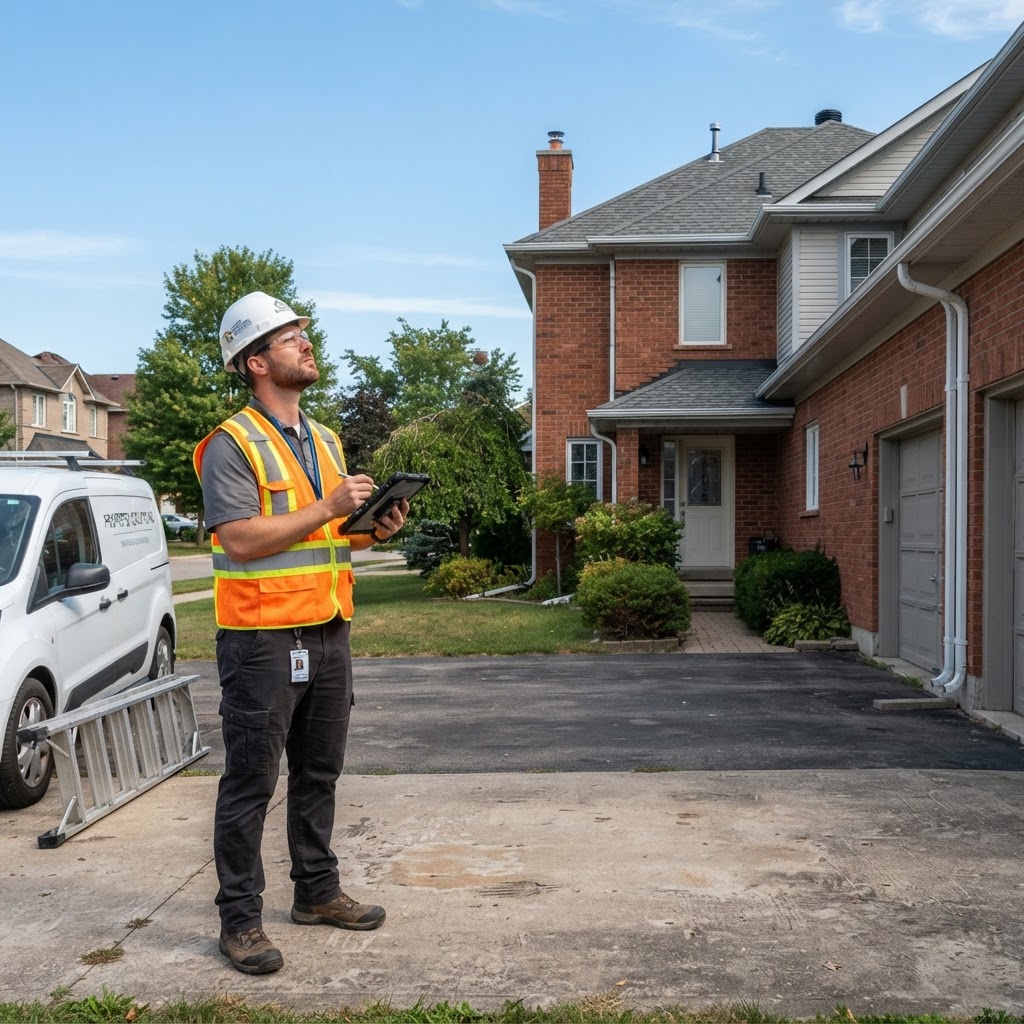
An insurance underwriting inspection is a risk assessment carried out on a property before a policy is issued or renewed. Inspectors evaluate structural integrity, safety systems, and maintenance standards to help insurers price risk accurately. Knowing what gets scrutinised — and why — helps property owners, managers, and field inspectors prepare effectively and avoid coverage surprises.
Key takeaways
- Underwriting inspections differ from claims inspections: they assess future risk, not existing damage.
- Most residential underwriting inspections take 30–60 minutes on-site; commercial inspections can run 2–4 hours.
- Common inspection standards referenced include InterNACHI SOP (US), AS 4349.1-2007 (Australia), and RICS Homebuyer Survey guidance (UK).
- Insurers typically flag properties with roofs over 20 years old, ungrounded wiring, or deferred maintenance as elevated risk.
- Thorough documentation — photos, measurements, and condition notes — is the single biggest factor in a clean report.
What Is an Insurance Underwriting Inspection?
An insurance underwriting inspection (sometimes called a risk survey or property condition survey) is a third-party or insurer-commissioned assessment of a property's physical condition and risk profile. It is distinct from a pre-purchase building inspection or a post-loss claims inspection.
The goal is straightforward: give the underwriter enough objective data to decide whether to offer coverage, at what premium, and with what exclusions or conditions attached. A poor result does not automatically mean no coverage — it often means the insurer will require remediation within a set timeframe (commonly 30–90 days) before binding the policy.
Exterior: The First Thing Every Inspector Evaluates
Roof Condition and Age
The roof is the single highest-risk element in a property underwriting inspection. Inspectors assess:
- Material type: Asphalt shingles, metal, tile, terracotta, or Colorbond (common in Australia). Each has a different expected lifespan.
- Estimated remaining useful life (RUL): A roof with less than 5 years of RUL is a common trigger for a conditional policy or surcharge.
- Visible defects: Missing, cracked, or curling shingles; exposed underlayment; failed ridge capping; sagging decking.
- Flashing integrity: Around chimneys, skylights, and penetrations. Failed flashing is a leading cause of water ingress claims.
In the US, insurers in hail-prone states (Texas, Colorado, Oklahoma) pay particular attention to impact-resistant ratings (Class 3 or Class 4 under UL 2218). In Australia, roof inspections under AS 4349.1-2007 require assessment of sarking, gutters, and downpipes as part of the building fabric.
Exterior Walls and Cladding
Inspectors check:
- Cladding type and condition (brick veneer, weatherboard, fibre cement, EIFS/render)
- Cracks wider than 3 mm, which may indicate structural movement
- Evidence of water penetration or efflorescence on masonry
- In Australia and the UK: aluminium composite cladding (ACP) that fails fire-spread tests remains a significant underwriting concern post-Grenfell
Foundation and Drainage
Visible foundation issues — stepped cracking in brickwork, uneven slab edges, or soil heave — are noted and often require a structural engineer's report before cover is confirmed. Poor site drainage that directs water toward the structure increases subsidence and water damage risk.
Interior: Structural and Safety Systems
Electrical Systems
Electrical faults are a leading cause of residential fire claims globally. Inspectors look for:
| Item | Risk Flag | |---|---| | Ungrounded (two-prong) outlets | High — common in pre-1960s US homes | | Aluminium branch wiring (1960s–70s) | High — fire risk at connections | | Fuse box rather than circuit breakers | Medium — limited fault protection | | Double-tapped breakers | Medium — overloading risk | | No RCD/GFCI protection in wet areas | High — electrocution risk |
In Australia, residual current devices (RCDs) are mandatory for all new installations under AS/NZS 3000:2018 (the Wiring Rules). Inspectors note whether existing properties have been updated to comply.
Plumbing and Water Systems
- Pipe material: Galvanised steel pipes in homes over 40 years old are flagged for corrosion risk. Polybutylene (PB) pipe — installed widely in the US between 1978 and 1995 — is a hard stop for many insurers due to its failure history.
- Hot water systems: Age, condition, and whether a pressure relief valve (PRV) is installed and accessible.
- Evidence of past leaks: Staining on ceilings, swollen cabinetry under sinks, or damp subfloor timbers.
Heating, Ventilation, and HVAC
Inspectors verify that heating appliances are correctly flued and that there is no evidence of carbon monoxide risk. In commercial properties, HVAC maintenance logs may be reviewed. A system more than 15–20 years old without documented servicing is commonly flagged.
Safety and Liability Features
Smoke and Fire Detection
Requirements vary by jurisdiction, but inspectors typically verify:
- Smoke alarms are present on every habitable level
- In Australia: hardwired or 10-year lithium battery alarms per state legislation (e.g., Queensland's Fire and Emergency Services Act 1990 requirements, updated 2022)
- In the UK: Grade D, LD2 alarm systems as a minimum for rental properties under BS 5839-6:2019
- Commercial properties: Compliance with AS 1670.1 (Australia) or BS 5839-1 (UK) for full fire detection systems
Security and Liability Exposures
- Fencing: Swimming pools must have compliant fencing (in Australia, AS 1926.1-2012; in the US, IRC Section R326). Non-compliant pool barriers are a liability exclusion trigger.
- Trampolines, treehouses, and playground equipment: Often listed as attractive nuisance items in US underwriting guidelines, potentially requiring specific liability endorsements.
- Handrails and stairs: Missing or non-compliant handrails on stairs exceeding two risers are flagged as slip-and-fall liability.
Commercial Property: Additional Inspection Scope
For commercial underwriting inspections, the scope expands considerably.
Construction Classification
Insurers use construction classification systems to rate fire resistance:
- ISO Construction Classes 1–6 (US): Class 1 (frame) carries the highest fire risk; Class 6 (fire resistive) the lowest.
- AS 1530 fire test standards (Australia): Rate wall, floor, and roof assemblies for fire resistance level (FRL) in minutes.
The inspector documents wall, floor, and roof construction materials to assign the correct class.
Occupancy and Operations
- What business operations occur on-site, and do they involve flammable materials, heavy machinery, or public access?
- Are hazardous materials stored? Is there a current Safety Data Sheet (SDS) register?
- What is the maximum occupancy, and is it within building code limits?
Fire Suppression and Protection
- Sprinkler system presence, type (wet pipe, dry pipe, deluge), last service date
- Fire extinguisher placement and current inspection tags
- Fire doors: self-closing, correctly labelled, not wedged open
- Exit signage illuminated and unobstructed
Business Continuity Risks
- Roof-mounted plant and equipment secured against wind uplift
- Backup power for critical systems
- Evidence of housekeeping standards (combustible waste accumulation is a major arson and fire spread risk)
How Inspectors Document Their Findings
Documentation quality determines whether a report is accepted or sent back for clarification. A professional underwriting inspection report typically includes:
- Site photographs with timestamps and GPS coordinates — minimum one photo per defect, plus overview shots of all four elevations
- Condition ratings — commonly a scale of Good / Fair / Poor / Critical
- Estimated repair costs where required (more common in commercial inspections)
- Compliance references — citing the specific standard or regulation that applies
- Recommended actions with a suggested rectification timeframe
Platforms like Inspectra AI streamline this process by converting field photos and voice notes into structured, insurer-ready reports — reducing report preparation time from hours to minutes while maintaining the audit trail underwriters require.
Common Reasons Properties Fail Underwriting Inspections
- Roof age exceeding insurer thresholds (often 20–25 years for asphalt shingles)
- Unresolved prior claims damage (visible but unrepaired storm, water, or fire damage)
- Non-compliant pool or balcony barriers
- Knob-and-tube wiring or aluminium branch wiring still in active use
- Absence of smoke alarms in required locations
- Active pest damage (termite workings in structural timbers)
- Commercial: no current sprinkler service records or fire extinguisher tags
None of these is automatically fatal to coverage, but each will generate a binding condition requiring rectification — typically within 30, 60, or 90 days depending on severity.
Preparing a Property for an Underwriting Inspection
Property managers and owners can take practical steps before an inspector arrives:
- Clear access: Ensure the roof space, subfloor, electrical panel, and plant rooms are accessible.
- Gather documentation: Age of roof, last electrical inspection certificate, HVAC service records, pool fence compliance certificate.
- Address visible deferred maintenance: Broken gutters, peeling paint on exterior timbers, and cracked render are inexpensive to fix but disproportionately affect a risk rating.
- Test smoke alarms: Replace batteries, confirm hardwiring is functional.
- Pool compliance: Obtain a current barrier compliance inspection from a licensed inspector before the underwriting visit.
Frequently Asked Questions
How long does an insurance underwriting inspection take?
Residential inspections typically take 30–60 minutes on-site. Commercial inspections vary widely — a small retail tenancy may take 1 hour, while a multi-storey industrial facility can require a full day. Report preparation adds additional time, though automated tools can cut this significantly.
Can a property be insured if it fails an underwriting inspection?
Yes, in most cases. A failed inspection usually results in a conditional offer — coverage is bound subject to specific defects being rectified within a set timeframe (commonly 30–90 days). Insurers rarely decline outright unless the property presents an imminent or unacceptable risk.
Who pays for an insurance underwriting inspection?
For new commercial policies, the insurer typically absorbs the cost as part of underwriting. For residential properties, practice varies: some insurers include it in the policy cost, others charge a flat fee of A$150–$400 / US$100–$300 / £80–£200 depending on property size and complexity.
What is the difference between an underwriting inspection and a claims inspection?
An underwriting inspection assesses future risk to determine whether and how to insure a property. A claims inspection is triggered after a loss event and assesses the cause, extent, and value of damage. They are conducted at different points in the insurance lifecycle and often by different specialists.
Do inspectors check inside the roof space?
Generally yes — for residential properties, roof space access is standard if a hatch is present and safely accessible. Inspectors look for insulation condition, signs of water ingress, pest activity, and the condition of roof framing members. In some commercial inspections, confined space regulations may limit internal access.
What standards govern insurance property inspections in Australia?
The primary standard for building condition assessments is AS 4349.1-2007 (Inspection of buildings — Pre-purchase inspections — Residential buildings). While written for pre-purchase contexts, it is widely referenced for insurance purposes. Electrical work must comply with AS/NZS 3000:2018, and pool barriers with AS 1926.1-2012.
Bottom Line
Insurance underwriting inspections are methodical risk assessments covering the roof, structure, electrical and plumbing systems, safety devices, and — for commercial properties — fire suppression and occupancy conditions. Understanding what inspectors look for lets property managers prepare proactively and helps field inspectors produce reports that meet underwriter expectations the first time.
If you're producing underwriting inspection reports in the field, start a free trial with Inspectra AI and see how AI-assisted report generation reduces paperwork without sacrificing the accuracy and compliance traceability insurers demand.