
All articlespest inspection
Pest Inspection Documentation: What to Record on Site
Inspectra AI Team November 10, 2026 4 min read
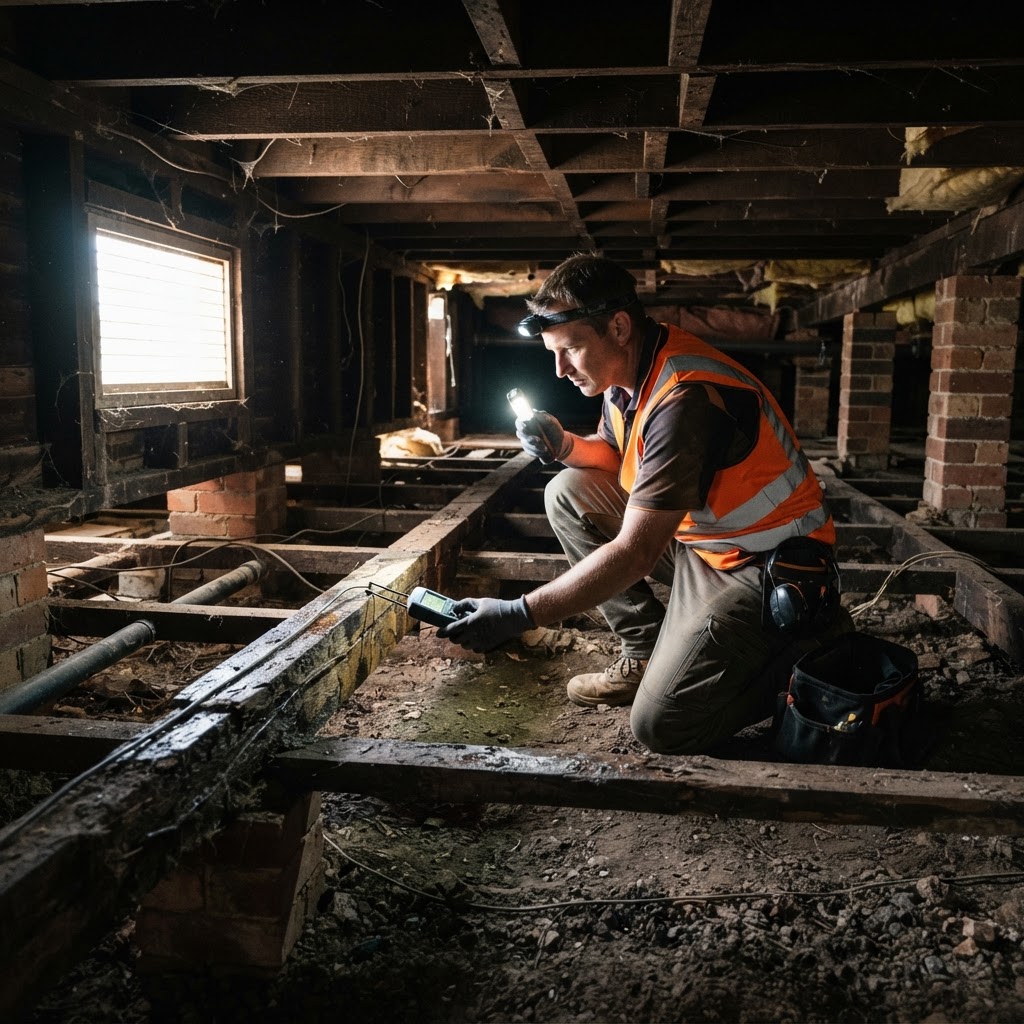
A well-executed pest inspection is only as valuable as the documentation behind it. If your on-site records are incomplete, ambiguous, or missing critical details, the report you produce can be challenged, discredited, or rendered legally unenforceable. This guide covers exactly what to capture during a pest inspection — and why each element matters.
Pest inspectors, property managers, and insurance adjusters frequently face disputes — from buyers who claim they weren't warned about termite activity, to vendors who contest findings they believe were exaggerated. In every one of those scenarios, the inspector's on-site documentation is the primary line of defence.
Documentation serves three distinct purposes:
The mistake most inspectors make isn't in their eye for pest activity — it's in how they record what they find.
In Australia, timber pest inspections are governed by AS 4349.3-2010 — Inspection of Buildings: Timber Pest Inspections. This standard requires inspectors to:
Failing to document inaccessible areas is one of the most common compliance gaps in Australian pest reports — and one of the first things scrutinised in a dispute.
In the US, Wood-Destroying Organism (WDO) reports — sometimes called WDI (Wood-Destroying Insect) reports — are required in most real estate transactions and must comply with individual state pest control board regulations. While requirements vary by state, the National Pest Management Association (NPMA) Form 33 is the most widely used standardised format and requires documentation of:
InterNACHI's Standards of Practice also provide useful benchmarks for general home inspectors covering pest-adjacent observations.
In the UK, timber and damp surveys are typically carried out under RICS guidance notes (e.g. the RICS Surveying Safely guidance and the Homebuyer Survey framework). While there is no single equivalent to AS 4349.3, RICS-registered surveyors are expected to document:
Use this as a field reference during every pest inspection.
| Item | What to record | |---|---| | Property address | Full address including unit/lot number | | Inspection date and time | Start and end time | | Weather conditions | Temperature, humidity, recent rainfall | | Property type | Freestanding, strata, commercial, etc. | | Construction type | Timber frame, brick veneer, slab-on-ground, etc. | | Inspector name and licence number | Required for compliance in AU, US, UK |
This is the section that protects you most in a dispute. For every area of the property, record whether it was:
Common inaccessible areas to document include roof voids, subfloor spaces with less than 400mm clearance, areas concealed by stored items, and wall cavities.
For each active infestation identified, record: