
All articlessolar panel inspection
Solar Panel Inspection Frequency: How Often and Why
Inspectra AI Team October 25, 2026 10 min read
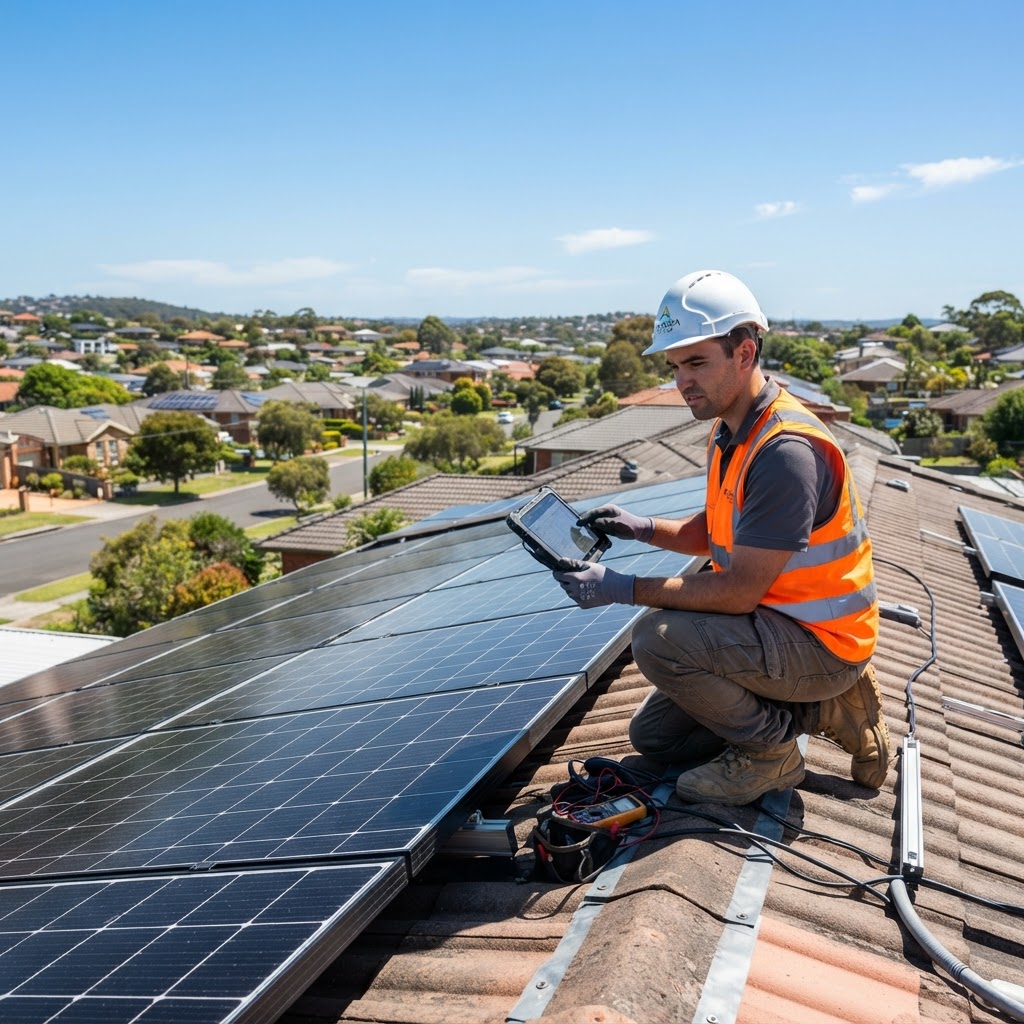
Most solar installations should be inspected at least once every two years, with annual inspections recommended for commercial systems or arrays in harsh environments. Inspection frequency depends on system age, location, warranty conditions, and the consequences of undetected faults — particularly for insured or tenanted properties.
Solar panels are largely maintenance-free on the surface, which creates a false sense of security. Degradation, soiling, micro-cracks, and connection faults can reduce output by 15–30% before they become visible to the naked eye. Regular inspections close this gap between perceived performance and actual performance.
For property managers and strata managers overseeing buildings with rooftop arrays, irregular inspections also create liability exposure. If a fault causes a fire or roof penetration leak and inspection records are absent, insurers may dispute claims. In the UK, the Microgeneration Certification Scheme (MCS) recommends an annual check by a qualified installer. In Australia, the CEC Code of Conduct for solar retailers implies ongoing system health obligations. In the US, the National Electrical Code (NEC) Article 690 governs photovoltaic system safety, and many AHJs (Authorities Having Jurisdiction) expect documented periodic inspections.
For a standard residential grid-connected system (typically 6–13 kW in Australia, 5–10 kW in the US), the broadly accepted interval is every 1–2 years for a full inspection. Between formal inspections, owners should carry out a visual check from ground level every 3–6 months — looking for obvious panel damage, soiling, or shading from new vegetation.
Factors that shorten the interval to annual:
Commercial systems (typically 30 kW–1 MW+) carry greater financial and safety stakes. Annual inspections are the practical standard, with some insurers and commercial leases requiring biannual inspections or a thermal imaging scan every 12 months. Any system feeding into a Power Purchase Agreement (PPA) should have inspection intervals written into the contract.
Large ground-mounted systems face additional threats: vegetation encroachment, soil erosion around footings, pest nesting under panels, and greater exposure to mechanical damage from farm equipment. These systems typically require quarterly visual patrols by operations staff plus a full electrical and thermal inspection annually.
For strata schemes with shared rooftop solar (increasingly common in Australia under embedded network arrangements), the owners corporation is typically responsible for the system. The inspection interval should be documented in the strata maintenance plan — annually is the minimum defensible position, particularly where the system offsets common area electricity costs.
Understanding inspection types helps you build a realistic schedule rather than treating all inspections as interchangeable.
| Inspection Type | Typical Interval | Key Focus | |---|---|---| | Visual / physical | Every 6–12 months | Panel surface, mounting hardware, roof penetrations, wiring condition | | Electrical safety check | Every 1–2 years | DC/AC isolators, earthing, circuit protection, inverter connections | | Thermal imaging (IR) | Every 1–2 years | Hot spots, cell-level defects, bypass diode failure | | Performance audit | Annually | Generation data vs. modelled output, soiling loss, shading analysis | | Post-event inspection | After any severe weather, fire proximity, or physical impact | Structural integrity, arc fault risk, cracked cells |
Thermal imaging (infrared thermography) deserves special mention. It detects temperature anomalies invisible to the eye — a faulty bypass diode can run 40–80°C hotter than surrounding cells without any visible cracking. IEC 62446-3 provides the international framework for thermographic inspection of PV systems and specifies that images should be captured when irradiance exceeds 600 W/m².
Scheduled intervals are the baseline. These events should trigger an immediate inspection regardless of when the last one occurred:
For insurance adjusters, documenting whether an unscheduled post-event inspection was completed — and how quickly — is often material to claim validity. A system that sustained hail damage but wasn't inspected for 14 months leaves the causal timeline unclear.
Frequency is only defensible if it's documented. An inspection that wasn't recorded might as well not have happened — particularly in insurance, strata, or commercial lease contexts.
Effective inspection records should include:
Platforms like Inspectra AI make it straightforward to capture field photos and voice notes on-site and generate structured, professional reports — reducing the administrative burden that often causes inspection records to be incomplete or delayed.
For property managers or facilities teams overseeing multiple sites, ad hoc inspection scheduling is a liability. A practical approach:
If you're ready to bring this level of structure to your solar inspection workflow, start a free trial of Inspectra AI.
The Clean Energy Council recommends a maintenance inspection every 1–2 years. Annual inspections are advisable for systems older than 10 years, those in coastal environments, or any system that has logged inverter faults or sustained storm damage.
Yes, in many cases. Panel manufacturers typically require documented evidence of periodic inspection and proper maintenance to honour performance warranties (which commonly run 25 years). Absence of inspection records gives manufacturers grounds to dispute degradation claims.
Thermal imaging uses infrared cameras to detect heat anomalies in individual cells — problems like bypass diode failure or micro-cracks that reduce output without visible surface damage. IEC 62446-3 governs this inspection type. For commercial systems, annual thermal imaging is best practice; for residential systems, every 2 years is generally sufficient unless faults are suspected.
Visual inspections can be conducted by a trained property inspector or facilities manager. However, any inspection involving testing of DC isolators, earthing continuity, or inverter electrical connections must be performed by a licensed electrician in Australia and most US and UK jurisdictions. Always confirm local licensing requirements before scoping the work.
An overdue system should be treated as high priority for a full inspection — visual, electrical, and thermal if feasible. The inspector should review monitoring data for any unexplained output trends and check all isolators, earthing, and roof penetrations. Extended gaps in inspection history may also need to be disclosed to insurers.
Retain dated, signed inspection reports with photographic evidence, inspector credentials, and findings. A report generated by a qualified inspector and stored in a retrievable format (PDF or cloud-based platform) is the accepted standard. Verbal assurances or undated photos carry no evidentiary weight.
Solar panel inspection frequency isn't arbitrary — it's driven by system type, age, environment, warranty conditions, and regulatory obligations that vary by jurisdiction. As a baseline: annual for commercial, biennial for standard residential, and immediate after any triggering event. The critical factor is documentation: an undocumented inspection provides no protection when a warranty dispute, insurance claim, or safety incident arises.
Inspectra AI helps inspectors capture field observations, generate structured reports, and maintain a clear audit trail — so your inspection frequency is always provable, not just intended. Start a free trial and see how much faster compliant solar inspection reports can be produced.