
All articlespest inspection
Termite Inspection Cost: What You Should Expect to Pay
Inspectra AI Team October 26, 2026 10 min read
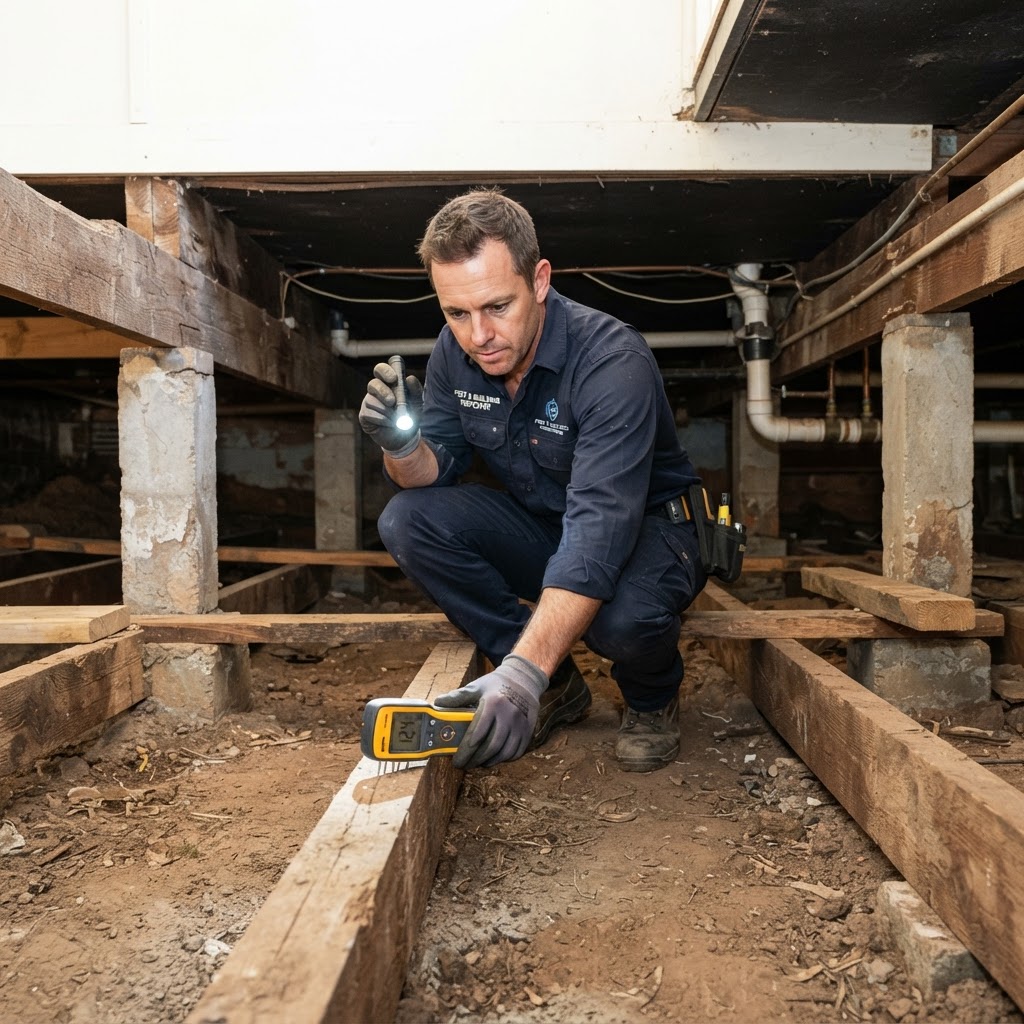
A standard termite inspection costs between $150–$350 AUD in Australia, $75–$325 USD in the United States, and £100–£250 in the UK, depending on property size, access conditions, and the technology used. Prices vary significantly between a basic visual inspection and one using thermal imaging or moisture meters. Understanding what drives those differences helps you budget accurately and avoid paying for more — or less — than you actually need.
A termite inspection — sometimes called a timber pest inspection in Australia — is a systematic assessment of a building and its immediate surroundings for evidence of termites (subterranean and drywood), borers, and wood decay fungi. The inspector examines accessible areas including:
Under AS 4349.3-2010, Australian inspectors must report on all accessible areas and clearly note any areas that could not be inspected. In the US, a standard WDO (Wood-Destroying Organism) inspection follows the NPMA-33 form, which documents visible evidence of active infestation, previous treatment, and damage.
| Property type | Typical cost (AUD) | |---|---| | Apartment / unit | $150–$200 | | Small house (up to 200 m²) | $200–$280 | | Standard house (200–400 m²) | $250–$350 | | Large or complex property | $350–$550+ | | Acreage or rural property | $400–$700+ |
Prices are higher in Queensland, the Northern Territory, and coastal NSW due to elevated termite pressure and the expectation that inspectors spend more time on sub-floor and perimeter checks. Most licensed pest inspectors in Australia hold a Certificate III in Pest Management (CPP30119) and must carry professional indemnity insurance.
| Property type | Typical cost (USD) | |---|---| | Apartment / condo | $75–$150 | | Small house (up to 1,500 sq ft) | $100–$200 | | Standard house (1,500–3,000 sq ft) | $150–$275 | | Large house (3,000+ sq ft) | $225–$325+ | | Commercial building | $300–$700+ |
Many US pest control companies offer free termite inspections to residential owners as part of a treatment sales process. Independent, fee-for-service inspections — which carry no conflict of interest — generally cost $150–$325. Real estate transactions typically require a WDI (Wood-Destroying Insect) report using the NPMA-33 form, which your lender or buyer may stipulate.
Termites are far less prevalent in the UK; most timber pest concerns involve woodworm (Anobium punctatum), death watch beetle, or wet and dry rot. Specialist timber and damp surveys typically cost £100–£250 for a standard house, rising to £300–£500 for larger or listed properties. The Property Care Association (PCA) accredits UK timber and damp surveyors, and their members follow BS 8102 and BS EN 1995 for structural timber assessment.
The single biggest cost driver. A large house with a full sub-floor, roof void, multiple outbuildings, and extensive gardens requires two to three hours of inspection time versus 45–60 minutes for a compact apartment. Most inspectors charge on a combination of floor area and site complexity rather than a flat rate.
A visual-only inspection is the baseline. Many inspectors now use one or more of the following tools, which increase accuracy but add to the fee:
Restricted access — low sub-floors (under 400 mm clearance), locked areas, stored goods blocking inspection, or fixed floor coverings — reduces the scope of inspection and must be noted in the report. Inspectors should not charge a full fee for a reduced-scope inspection, but they may charge a re-inspection fee if access issues require a return visit.
Rural or regional properties attract travel surcharges of $50–$150 AUD depending on distance. Metropolitan inspectors in high-demand areas (Sydney, Brisbane, Melbourne) may charge a premium during peak pre-purchase seasons (spring and autumn).
Same-day digital report delivery — often required for pre-purchase inspections — can attract a $25–$50 premium. Reports that must meet specific lender or conveyancer formats may also cost more.
In Australia, buyers commonly commission a combined building and pest inspection (also called a P&B inspection). These packages assess both structural defects and timber pests in a single visit and typically cost:
| Property type | Combined package (AUD) | |---|---| | Apartment / unit | $350–$450 | | Standard house | $450–$650 | | Large house | $600–$850 |
This is usually better value than booking separately. When comparing quotes, confirm that both components are performed by qualified professionals — some operators sub-contract one element without disclosing it.
Not every inspection warrants thermal imaging and radar detection. Consider the upgrade when:
For property managers and strata managers in particular, the cost difference between a visual-only and a technology-assisted inspection is small relative to the liability exposure of a missed active infestation.
To contextualise the inspection fee: termite treatment in Australia costs $1,500–$5,000+ AUD depending on the treatment type (chemical barrier, baiting system, or fumigation) and infestation extent. In the US, treatment ranges from $500–$3,000+ USD. A $300 inspection that identifies an active colony early is one of the highest-ROI expenditures a property owner or manager can make. Missed or deferred inspections routinely result in structural damage costing tens of thousands to remediate.
The Australian Standard AS 3660.2 recommends at minimum annual inspections for all buildings, and every 6 months for high-risk properties (tropical climates, previous infestation history, or high-risk construction types). In the US, most pest control associations recommend annual inspections, with biannual checks in high-risk states like Florida and Texas.
In Australia, it is not legally required but is considered standard due diligence and is strongly recommended by conveyancers. In the US, many lenders — particularly those using FHA or VA loans — require a WDI inspection before settlement. In the UK, a timber and damp survey is advisable but not mandated.
Yes, particularly when booking combined building and pest inspections, or when commissioning multiple inspections (e.g. for a property portfolio). However, negotiate on scope or bundling rather than cutting corners on methodology or report standards.
A WDI (Wood-Destroying Insect) inspection is the US term and covers termites, wood-boring beetles, and carpenter ants. An Australian timber pest inspection under AS 4349.3 covers termites, wood borers, and wood decay fungi. Both assess the same core risk — timber damage by biological agents — but use different reporting frameworks.
No. A clear report means no evidence of termites was found in the accessible areas inspected at the time of inspection. Termites can be present in inaccessible wall cavities, under concrete slabs, or in areas with restricted access. This is why report limitations sections are important, and why annual inspections remain necessary even after a clear result.
For investment properties in Australia, termite inspection costs are generally tax deductible as a property maintenance expense. In the US, they may be deductible for rental properties. Always confirm with a tax adviser for your specific circumstances.
Termite inspections are a low-cost risk management tool relative to the damage they prevent. Expect to pay $200–$350 AUD, $150–$275 USD, or £150–£250 for a compliant, technology-assisted inspection on a standard residential property. Prioritise inspectors who are licensed, insured, compliant with the relevant standard (AS 4349.3 or NPMA-33), and who provide a written digital report with clearly documented scope and limitations.
For inspection businesses and property managers handling high report volumes, start a free trial with Inspectra AI to see how AI-assisted report generation reduces write-up time without compromising the compliance and detail your clients depend on.