
All articlesvehicle inspection
Vehicle Inspection Frequency: How Often and What's Required
Inspectra AI Team October 28, 2026 10 min read
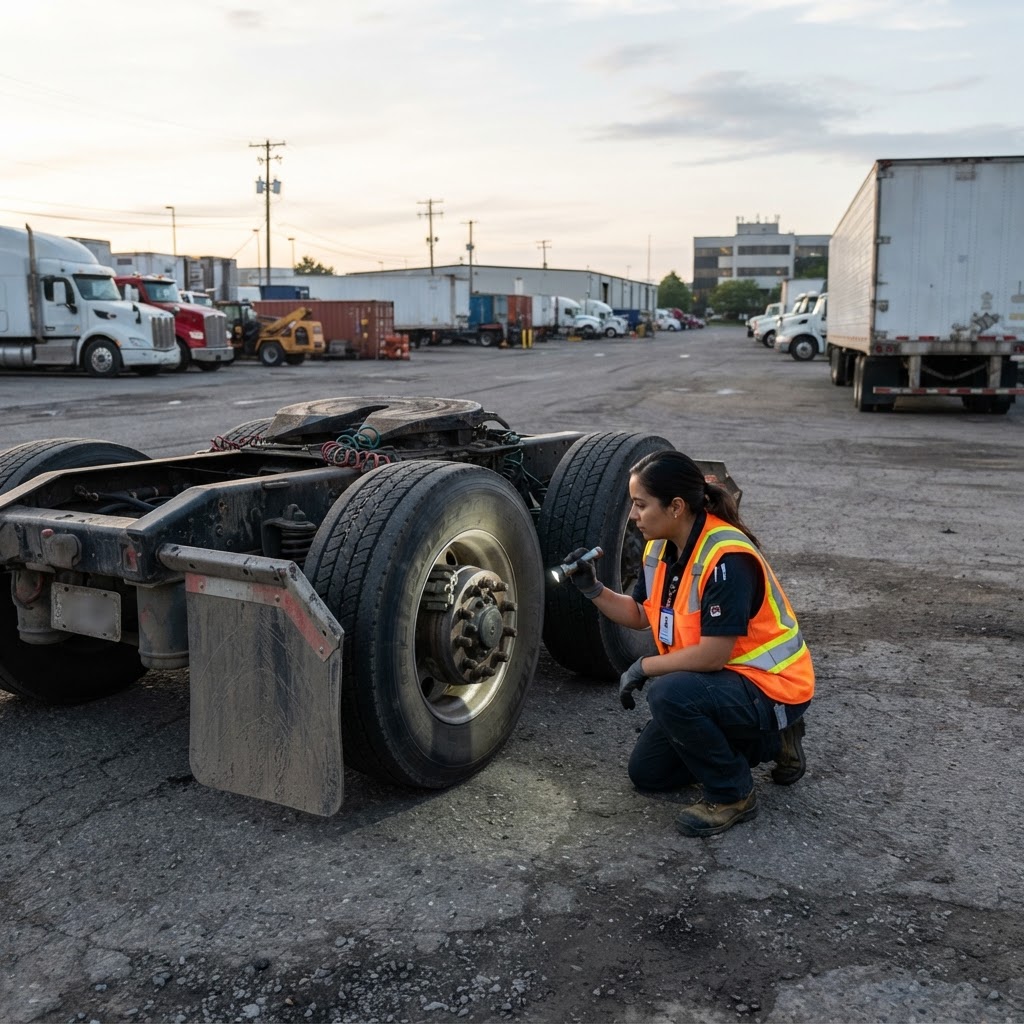
How often a vehicle must be inspected depends on its type, use, jurisdiction, and the regulatory framework that governs it. For most light passenger vehicles, annual roadworthiness checks are the legal minimum — but commercial fleets, heavy vehicles, and specialised equipment face far stricter schedules, often requiring inspections every 3 to 6 months or even before each shift.
Vehicle inspection frequency isn't just a regulatory checkbox. Inspection intervals directly affect road safety, asset lifespan, insurance validity, and legal liability. A vehicle that passes its annual check but receives no attention for 364 days in between can develop critical faults — worn brake pads, tyre degradation, lighting failures — that go undetected until an incident occurs.
For fleet operators and field inspectors, understanding the difference between minimum legal requirements and best-practice schedules is essential. Minimum intervals are floors, not ceilings.
In Australia, vehicle inspection requirements are split between light and heavy vehicles, and administered at both state/territory and federal levels.
Light vehicles (under 4.5 tonnes GVM):
Heavy vehicles (over 4.5 tonnes GVM):
The Heavy Vehicle National Law (HVNL), administered by the National Heavy Vehicle Regulator (NHVR), applies across all states and territories except WA and NT. Under HVNL:
In the US, vehicle inspection requirements differ significantly between commercial and private vehicles, and between states.
Commercial Motor Vehicles (CMVs):
The Federal Motor Carrier Safety Administration (FMCSA) regulates CMVs under 49 CFR Part 396. Key requirements include:
| Inspection type | Frequency | Reference | |---|---|---| | Annual (periodic) inspection | Every 12 months | 49 CFR 396.17 | | Pre-trip inspection | Before each trip | 49 CFR 396.13 | | Post-trip inspection / Driver Vehicle Inspection Report (DVIR) | After each trip | 49 CFR 396.11 | | Roadside inspection | On-demand by enforcement | CVSA North American Standard |
Drivers must complete a written DVIR after every trip if a defect is found or suspected. Carriers must retain DVIRs for 3 months.
The Commercial Vehicle Safety Alliance (CVSA) conducts periodic roadside inspections using a tiered Level I–VI system. Level I is the most comprehensive, covering both driver credentials and vehicle mechanical components.
Private/passenger vehicles:
Mandatory periodic safety inspections apply in roughly 17 states, including New York, Texas, and Pennsylvania. Frequency is typically annual. States without mandatory inspections (e.g. California, Florida) rely on emissions testing programs and roadside enforcement instead.
MOT test:
All vehicles over 3 years old must pass an annual MOT test, administered by DVSA-approved testing stations. The test covers:
First MOT is due 3 years after the vehicle's date of first registration. After that, annual renewal is mandatory. Driving without a valid MOT is an offence under the Road Traffic Act 1988, carrying a fine of up to £1,000.
Commercial operators:
Goods vehicles over 3.5 tonnes and PSVs (passenger-carrying vehicles) require:
The DVSA's Guide to Maintaining Roadworthiness recommends inspection intervals as short as 4 weeks for vehicles operating in arduous conditions.
For fleet operators, inspection frequency should align with both regulatory minimums and the manufacturer's maintenance schedule. A practical framework:
Rental fleets face higher turnover and greater variability in driver behaviour. Industry best practice, aligned with guidance from the Australian Rent a Car Association (ARACA) and similar bodies, recommends:
Plant and construction vehicles — excavators, forklifts, elevated work platforms — are governed by workplace health and safety legislation rather than road traffic law. In Australia, Safe Work Australia's Model WHS Regulations and state equivalents require:
In the US, OSHA 1926 Subpart O covers motor vehicles and mechanised equipment on construction sites, requiring daily inspections before use.
Regardless of jurisdiction, a defensible inspection record should capture:
Paper-based records are still legally acceptable in most jurisdictions, but they create significant risks: loss, illegibility, inconsistency, and difficulty aggregating data across a fleet. Digital platforms that produce structured, searchable reports reduce these risks substantially. The Fleet Vehicle Inspection Checklist published by Inspectra AI provides a detailed breakdown of what each item should cover.
Based on DVSA enforcement data, FMCSA audit findings, and NHVR compliance reports, the most frequent failures are:
Chain-of-responsibility provisions in Australia's HVNL and equivalent duties-of-care under FMCSA and UK operator licensing mean that documentation failures can expose not just drivers but fleet managers, schedulers, and business owners to prosecution.
Fleet telematics, sensor-based monitoring, and AI-assisted inspection platforms are shifting the industry from fixed-interval inspections toward condition-based or predictive schedules. Key developments:
Platforms like Inspectra AI allow field inspectors to capture photos, voice notes, and checklist items on-site and generate structured, professional inspection reports that meet the documentation standards required under HVNL, FMCSA, and DVSA frameworks.
Under the HVNL, heavy vehicles must have pre-trip inspections before fatigue-regulated operations and formal mechanical inspections at least annually. Most operators schedule full inspections every 3–6 months based on utilisation and manufacturer recommendations. State-based requirements may impose additional obligations.
No. The MOT establishes that a vehicle met minimum safety standards on the day of testing. Operators have an ongoing legal duty to maintain roadworthiness throughout the year. Commercial operators must follow the inspection intervals set out in their maintenance declaration, which may require checks every 4–13 weeks.
A Driver Vehicle Inspection Report (DVIR) is a written record required by 49 CFR 396.11 for commercial motor vehicle drivers. It must be completed after each trip if a defect is found or suspected. Carriers must retain DVIRs for at least 3 months and provide evidence that reported defects were repaired before the vehicle returned to service.
Yes. In Australia, HVNL's Chain of Responsibility provisions explicitly extend liability to fleet managers, schedulers, and business owners who knew or should have known about non-compliance. In the US, motor carriers face FMCSA audit penalties for systemic failures in inspection documentation. In the UK, operator licence holders bear direct responsibility for vehicle maintenance standards.
Retention periods vary: FMCSA requires DVIRs to be kept for 3 months and periodic inspection records for 14 months. UK operator licensing guidance recommends retaining maintenance records for 15 months. In Australia, NHVR recommends retaining records for at least 3 years. When in doubt, longer retention reduces risk.
The regulatory inspection intervals for EVs are largely the same as for equivalent combustion-engine vehicles under current MOT, FMCSA, and HVNL frameworks. However, EVs require additional attention to high-voltage battery systems, charging infrastructure, and regenerative braking components — areas that standard inspection checklists are only beginning to formalise.
Vehicle inspection frequency is governed by a patchwork of national and state-level regulations that differ by vehicle type, gross mass, and use case. The baseline for most light vehicles is annual; for commercial and heavy vehicles, quarterly or more frequent inspections are both required and prudent. What consistently creates liability isn't the inspection itself — it's incomplete, inconsistent, or missing documentation.
If you manage a fleet or conduct field inspections, standardising your inspection records is the most practical step you can take to close compliance gaps. Start a free trial with Inspectra AI to see how structured, photo-linked inspection reports can replace paper-based processes without adding time to your workflow.