
All articlessafety audit
Workplace Safety Audit Checklist: What Inspectors Look For
Inspectra AI Team September 22, 2026 10 min read
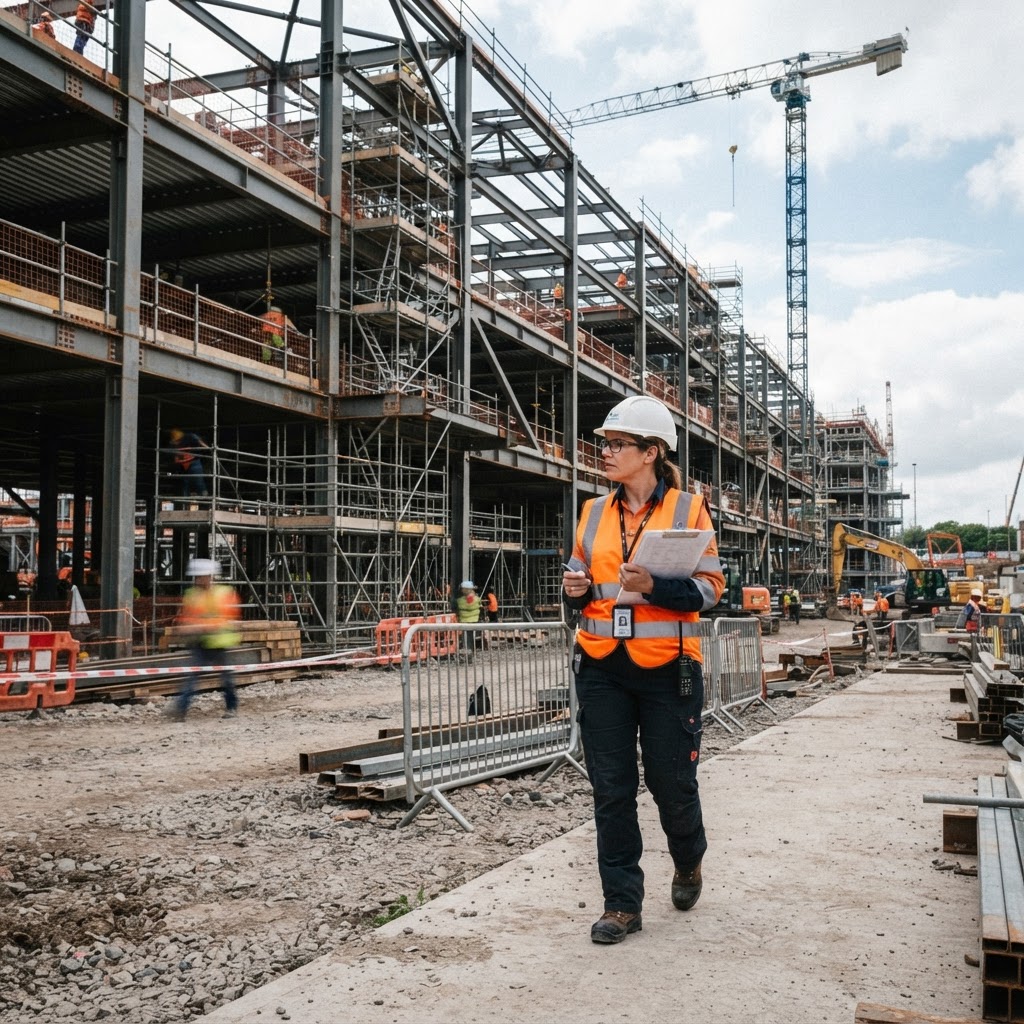
A workplace safety audit is a systematic, documented examination of a site's conditions, procedures, and management systems to verify compliance with relevant health and safety legislation. Inspectors assess physical hazards, administrative controls, and worker behaviour against a defined standard — typically the relevant national framework such as the Work Health and Safety Act 2011 (Australia), OSHA 29 CFR 1910/1926 (US), or the Health and Safety at Work Act 1974 (UK). The goal is to identify gaps before they become incidents.
Audits are initiated for several reasons:
Understanding the trigger matters because it shapes what the auditor prioritises and how findings will be used.
Before setting foot on site, a thorough inspector reviews the paper trail. Missing or outdated documentation is itself a finding. Key documents include:
| Document | What inspectors check | |---|---| | Safety Management Plan (SMP) | Current version, signed off by PCBU or employer | | Safe Work Method Statements (SWMS) | Specific to high-risk construction work; reviewed and signed by workers | | Hazard Register / Risk Register | Reviewed and updated within the last 12 months | | Incident and Near-Miss Logs | Complete entries, corrective actions closed out | | Training and Induction Records | Coverage for all current workers, including subcontractors | | Plant and Equipment Registers | Current inspection tags, service records, certificates of competency | | Emergency Response Plan | Reviewed annually, evacuation drills recorded | | Chemical Register / SDS Folder | Safety Data Sheets (SDS) present for all hazardous substances on site |
Any gap here tells the inspector where to focus the physical walkthrough.
This is the core of the audit. Inspectors move systematically through the site, usually zone by zone, using a structured checklist. What they look for falls into several categories.
Falls from height remain the leading cause of workplace fatalities across all three jurisdictions. Inspectors examine:
PPE is the last line of defence, but it is still heavily scrutinised:
If the site has confined spaces (defined as an enclosed or partially enclosed space not designed for continuous occupation, with a risk of engulfment, atmosphere, or entrapment):
Experienced inspectors spend time talking to workers, not just reviewing documents. They assess:
This phase often surfaces findings that paperwork alone would never reveal.
Most audit frameworks use a three-tier classification:
| Classification | Definition | Typical Response Timeframe | |---|---|---| | Critical / Major | Immediate risk of serious injury or death; regulatory breach | Immediate cessation or correction | | Significant / Moderate | Potential for injury; systemic gap in controls | 7–30 days | | Minor / Observation | Low risk; opportunity for improvement | 30–90 days |
Critical findings — such as an unguarded floor opening at height or workers in a confined space without a permit — may result in a prohibition notice stopping work on that task immediately.
Based on patterns across regulatory enforcement data and industry experience, the most frequent failure points are:
Traditionally, safety audits produced handwritten notes that were typed up hours or days later — a process that delays corrective action and introduces transcription errors. Platforms like Inspectra AI allow inspectors to capture photos, voice notes, and observations in the field and convert them into structured, professional audit reports in a fraction of the time. This means findings are documented with photographic evidence at the point of discovery, corrective action timelines can be assigned immediately, and the audit trail is complete from the first observation.
For organisations running multiple sites or managing subcontractor compliance, the ability to generate consistent, standardised reports at scale is a significant operational improvement.
If you know an audit is coming — or want to achieve a state of continuous audit-readiness — focus on these actions:
If you want a structured starting point, start a free trial with Inspectra AI and use the built-in safety audit template to run your own pre-audit before the regulator arrives.
A site audit for a medium-sized construction project (20–50 workers) usually takes 3–6 hours on site, plus 2–4 hours for document review and report writing. Larger or more complex sites can take 1–2 full days. The written report is typically delivered within 5–10 business days unless critical findings require immediate escalation.
A safety inspection is a routine check of physical conditions — looking for hazards in the workplace. A safety audit is broader: it evaluates whether the entire safety management system (documentation, training, procedures, culture, and physical conditions) is functioning as intended. Audits are more formal, evidence-based, and systematic.
In most jurisdictions, workers have the right to decline to be interviewed, and a good auditor will not pressure them. However, regulatory inspectors (e.g., OSHA compliance officers, HSE inspectors, SafeWork inspectors) have statutory powers to require answers and can interview workers privately without management present.
A critical finding typically results in an immediate directive to cease the unsafe activity. Regulatory inspectors can issue a prohibition notice, which legally stops work on a specific task or piece of equipment until the hazard is controlled. Improvement notices set a deadline for corrective action. Failure to comply can result in significant financial penalties — up to AUD 3 million for a corporation under the WHS Act 2011.
For most workplaces, a full safety audit should be conducted at least annually. High-risk environments (construction sites, manufacturing facilities, warehouses) benefit from quarterly audits or continuous monitoring supplemented by monthly safety inspections. ISO 45001 certification requires a documented internal audit programme with defined frequency.
Yes. Under the principle of duty of care and PCBU (Person Conducting a Business or Undertaking) obligations in Australia, the principal contractor is responsible for the safety of subcontractors on site. Auditors will check that subcontractor inductions, SWMS, and insurance documents are on file, and they may observe and interview subcontractor workers directly.
A workplace safety audit examines far more than visible hazards — it tests whether your entire safety system holds up under scrutiny. The most prepared sites are those that treat audit-readiness as a continuous discipline, not a pre-inspection scramble. Document your hazards, train your people, maintain your equipment, and close out your findings promptly.
If the reporting side is slowing you down, Inspectra AI can turn your field observations into a complete, professional audit report — faster and with less administrative overhead than traditional methods.